Energy

3rd June 2026

For architects, this shift reframes environmental responsibility — moving from reactive compliance to proactive design intelligence. Policy SI 1: Improving Air Quality sets out a clear expectation: developments must not only avoid harm but actively contribute to cleaner, healthier urban spaces.
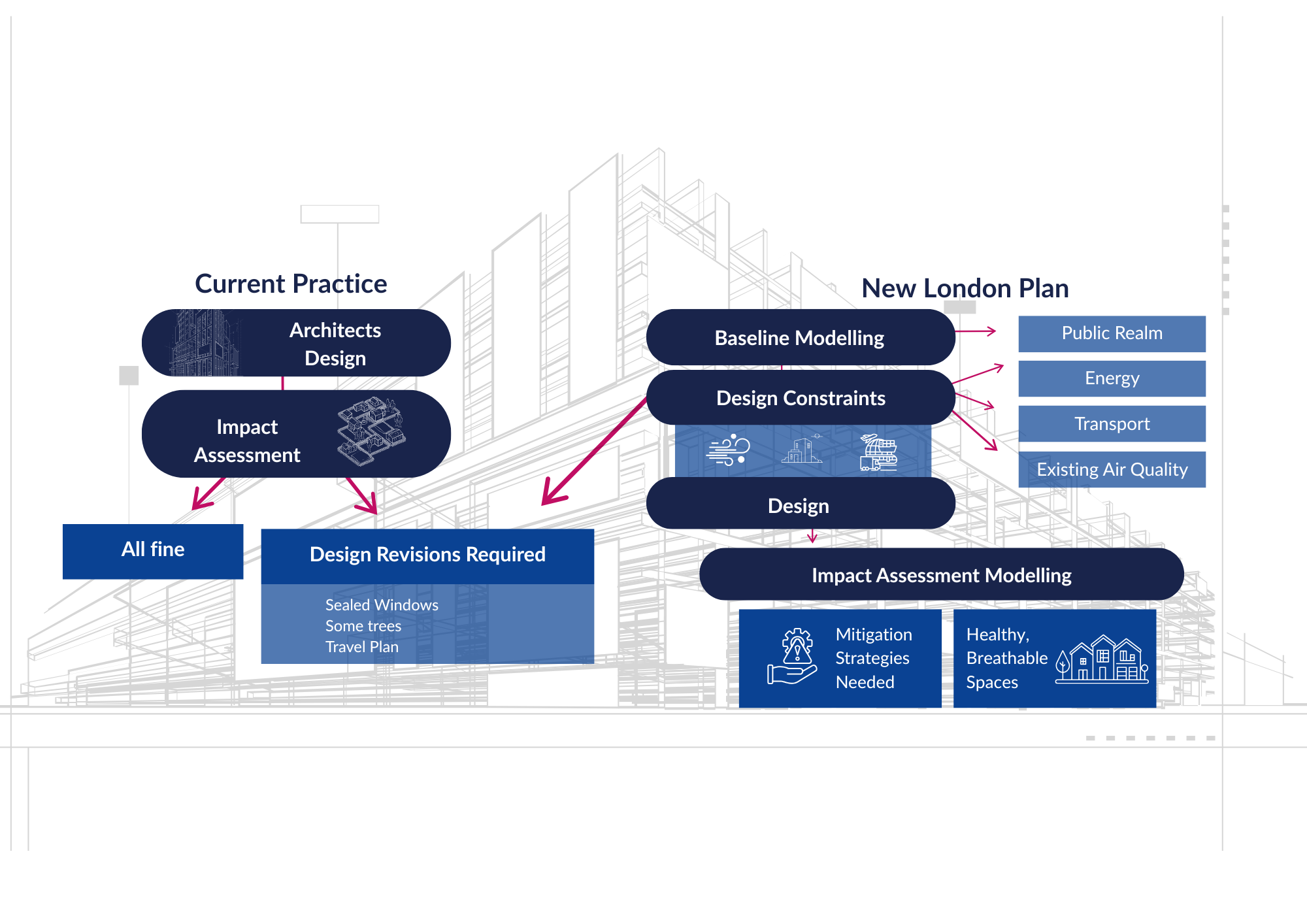

Historically, air quality has been treated as a late-stage consideration — an assessment conducted once the design is complete. The result? Mitigation measures that patch rather than prevent: sealed windows, token greenery, and travel plans that sit outside the architectural concept. Under the new framework, this approach no longer suffices. The New London Plan demands that air quality be embedded from the outset — through baseline modelling, design constraints, and impact assessments that shape the architecture itself.
Architects are now expected to design with air quality as a parameter, not a postscript. This means understanding how building orientation, façade materials, and ventilation strategies influence pollutant dispersion and occupant exposure. It’s a shift from “checking compliance” to “designing performance.”

The policy’s summary is direct:
For architects, these principles translate into tangible design actions. Using form and flow to channel clean air, integrating green infrastructure to absorb pollutants, and specifying low-emission materials are no longer optional — they’re integral to planning success.
This evolution presents an opportunity to elevate architectural practice. Air quality modelling can now inform spatial planning, façade articulation, and even landscape design. By integrating these insights early, architects can create healthy, breathable spaces that meet both regulatory and human needs.
At Arthian, we see this as a design advantage. Our approach combines environmental modelling with creative direction — helping architects visualise how air quality interacts with the built form. Through baseline data, constraint mapping, and impact forecasting, we enable design teams to make informed choices that align with Air Quality Positive outcomes.

The message is clear: air quality starts at the drawing board. By embedding environmental intelligence into concept design, architects can lead the transition to cleaner, more resilient cities. The result isn’t just compliance — it’s credibility. It’s the ability to demonstrate that design decisions contribute directly to wellbeing, sustainability, and long-term urban health.
As London’s planning landscape continues to evolve, architects who integrate air quality early will define the next generation of responsible design. Partner with Arthian to make air quality a design asset — not an afterthought.