Net Zero Carbon: Why Understanding Scope 1, 2 and 3 Emissions Is the Essential First Step
6th July 2026

As climate expectations continue to evolve, organisations are under increasing pressure from customers, investors, regulators and employees to demonstrate credible action on sustainability. Yet before any meaningful carbon reduction strategy can be developed, this is a fundamental question every organisation must answer
Understanding the difference between Scope 1, Scope 2 and Scope 3 emissions remains the foundation of any successful Net Zero strategy. Defined by the globally recognised Greenhouse Gas Protocol, these categories help organisations identify, measure and ultimately reduce their greenhouse gas (GHG) emissions across their operations and value chain.
Net Zero: More Than Carbon Offsetting
Despite becoming a widely used term, Net Zero is often misunderstood.
A credible Net Zero approach is not simply about purchasing offsets or planting trees. Instead, leading frameworks such as the Science Based Targets initiative (SBTi) define Net Zero as achieving deep emissions reductions across an organisation’s entire value chain before addressing any small volume of residual emissions through carbon removals.
In practical terms, organisations must focus first on reducing emissions at source. Only after significant decarbonisation has taken place should removals or offsets play a supporting role.
Importantly, businesses now report and manage greenhouse gas emissions, not just carbon dioxide. Reporting is typically measured in tonnes of carbon dioxide equivalent (tCO₂e), which accounts for the impact of multiple greenhouse gases including methane, nitrous oxide and fluorinated gases.

Understanding the Three Emissions Scopes
Scope 1: Direct Emissions
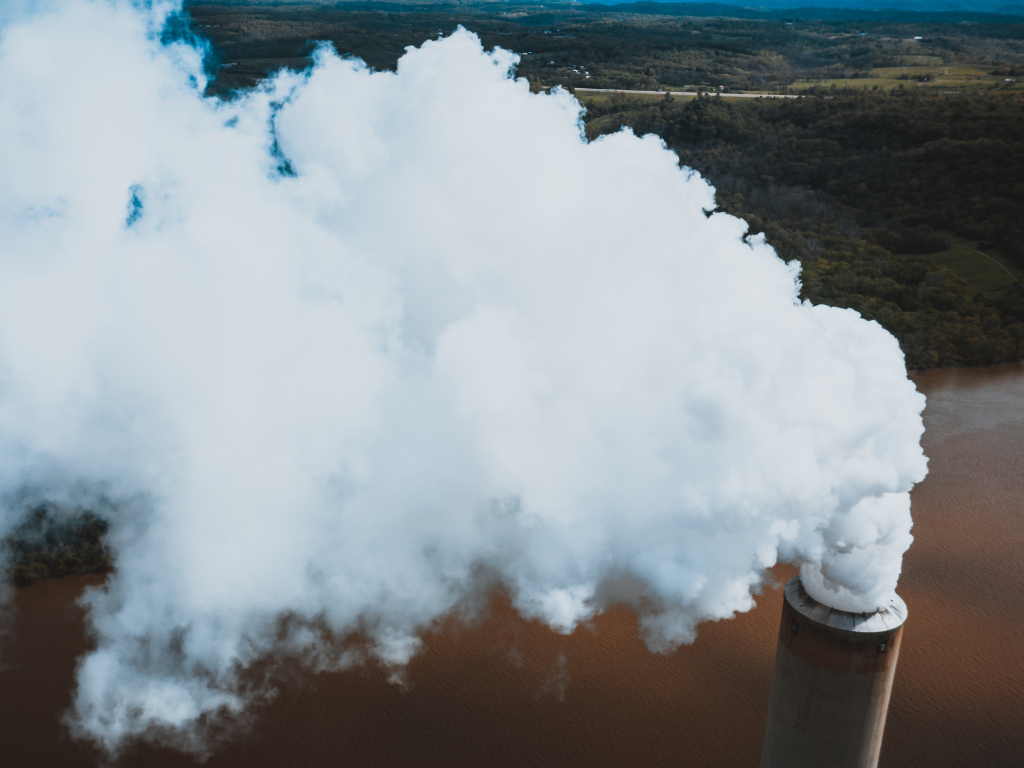
Scope 1 emissions are greenhouse gases released directly from sources owned or controlled by an organisation. These are often the easiest emissions to identify because they arise from day-to-day operations.
Examples include:
- Natural gas used in boilers and heating systems
- Fuel consumed by company vehicles
- Diesel generators
- Industrial process emissions
- Refrigerant leaks from air conditioning and cooling equipment
Refrigerant leaks are classified as fugitive emissions, a category that is often overlooked despite potentially having a significant climate impact. Unlike dust or particulate pollution, fugitive emissions refer specifically to unintended greenhouse gas releases from equipment or industrial systems.

Scope 2: Purchased Energy Emissions
Scope 2 emissions are indirect emissions associated with the generation of energy purchased and consumed by an organisation. Although these emissions physically occur at power stations or energy facilities, they are attributed to the organisation because they result from its energy demand.
Scope 2 reporting typically includes:
- Purchased electricity
- District heating
- District steam
- District cooling
For many office-based organisations, Scope 2 emissions can represent a significant portion of their operational footprint and often provide some of the quickest opportunities for carbon reduction through energy efficiency measures and renewable electricity procurement.

Scope 3: The Value Chain Challenge
Scope 3 emissions encompass all other indirect emissions occurring throughout an organisation’s value chain. These emissions are often the most complex to measure but frequently represent the largest share of an organisation’s total carbon footprint.
The Greenhouse Gas Protocol identifies 15 Scope 3 categories covering both upstream and downstream activities. These include:
- Purchased goods and services
- Capital goods
- Waste generated in operations
- Business travel
- Employee commuting
- Transportation and distribution
- Leased assets
- Use of sold products
- End-of-life treatment of sold products
For many organisations, Scope 3 emissions account for more than 70% of total emissions, making them impossible to ignore when developing a credible Net Zero strategy.

Where Organisations Should Start
One of the most common barriers to climate action is the perception that carbon accounting is too complex to begin.
In reality, the most effective approach is often the simplest: start measuring.
A practical first step is to establish a baseline by collecting data on:
- Fuel consumption
- Electricity usage
- Business travel
- Waste generation
- Employee commuting
- Key supplier activities where information is available
Organisations do not need perfect data from day one. Establishing an initial baseline creates visibility and enables continuous improvement over time.
The Future of Net Zero Is Collaborative
No organisation will achieve Net Zero in isolation.
As reporting requirements mature and expectations rise, businesses are increasingly recognising that industry-wide collaboration is essential. From sharing best practice and engaging suppliers to adopting science-based targets, collective action will play a crucial role in accelerating decarbonisation.
The organisations making the greatest progress are not necessarily those with the most sophisticated carbon programmes today. They are the organisations that have taken the first step, built visibility into their emissions and used that insight to drive meaningful action.
Net Zero begins with understanding
Before organisations can reduce emissions, set science-based targets or deliver meaningful change, they must first understand where emissions occur across Scope 1, Scope 2 and Scope 3. The businesses that build this foundation today will be best positioned to thrive in the low-carbon economy of tomorrow.