
The Challenge
The Applicant is one of the Midlands’s leading suppliers of aggregates, sand and soils to the construction industry. They supply from their own strategically-located local sources that ensures the highest levels of product quality. An existing quarry development owned by the client was nearing the end of its working life, necessitating a replacement site for the operator who had at that time no other allocated future provision in the area.
A greenfield site was identified, with a known mineral resource (sand and gravel) but without allocation in the local mineral plan. Crestwood Environmental (now Arthian) were appointed to pursue a minerals allocation and seek planning permission for 3.5 million tonnes of minerals release. Arthian took on this project at a very early stage, necessitating significant work to produce an environmentally acceptable scheme, within rural Shropshire, with heritage and archaeology aspects proving to be an important consideration.
The Solution
A desk-based assessment was carried out on behalf of the client to support their planning application and assess the potential for below ground archaeological remains. A geophysical survey was undertaken to support the desk-based assessment and also to highlight any anomalies which might have an archaeological origin, in order to more accurately target the next phase of archaeological intervention.
Once planning consent was received, the planning conditions placed on the site stated that a programme of suitable archaeological investigations should be undertaken to test the archaeological potential of the site, which was later investigated further in a strip, map and sample investigation. In the southern part of the site, a group of 3 re-enforced concrete slabs each 1m square were identified lying approximately 0.40m below the plough-soil each of the slabs cast with a central hole.
Further research revealed that the site had previously been used as a location for a WWII decoy ‘Starfish’ site. These were constructed during the WWII near to airfields, factories and towns critical to the war effort to draw enemy bombers away from their target.
These sites comprised a series of metal tanks and wire baskets supported above the ground by 4-6 steel posts sitting on the concrete slabs. Contained within the tanks and baskets would have been placed flammable liquids and burnable materials that would have been remotely ignited from a control bunker nearby. These would have been lit when the enemy bomber formations were detected and were designed to fool the bomb aimer in the aircraft into thinking they were over the intended target, the layout of the fires mimicking the layout of streets, buildings and structures of the intended target.
When incendiaries were dropped on a target, they were extinguished as soon as possible whilst, at the same time, local Starfish Sites were instructed to light their decoy basket fires. From 10,000 feet these would look like burning streets and factories to overhead German bombers.
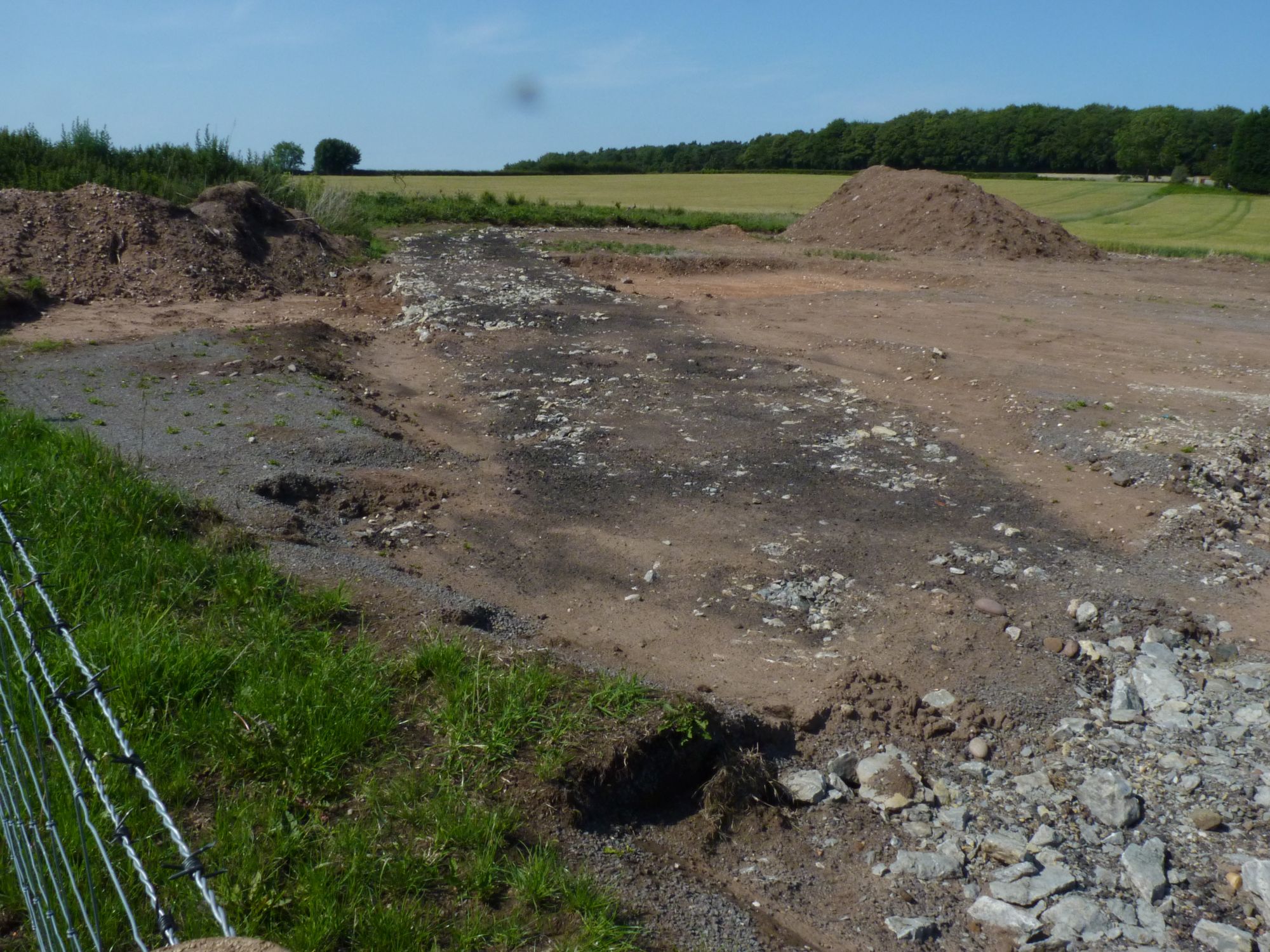
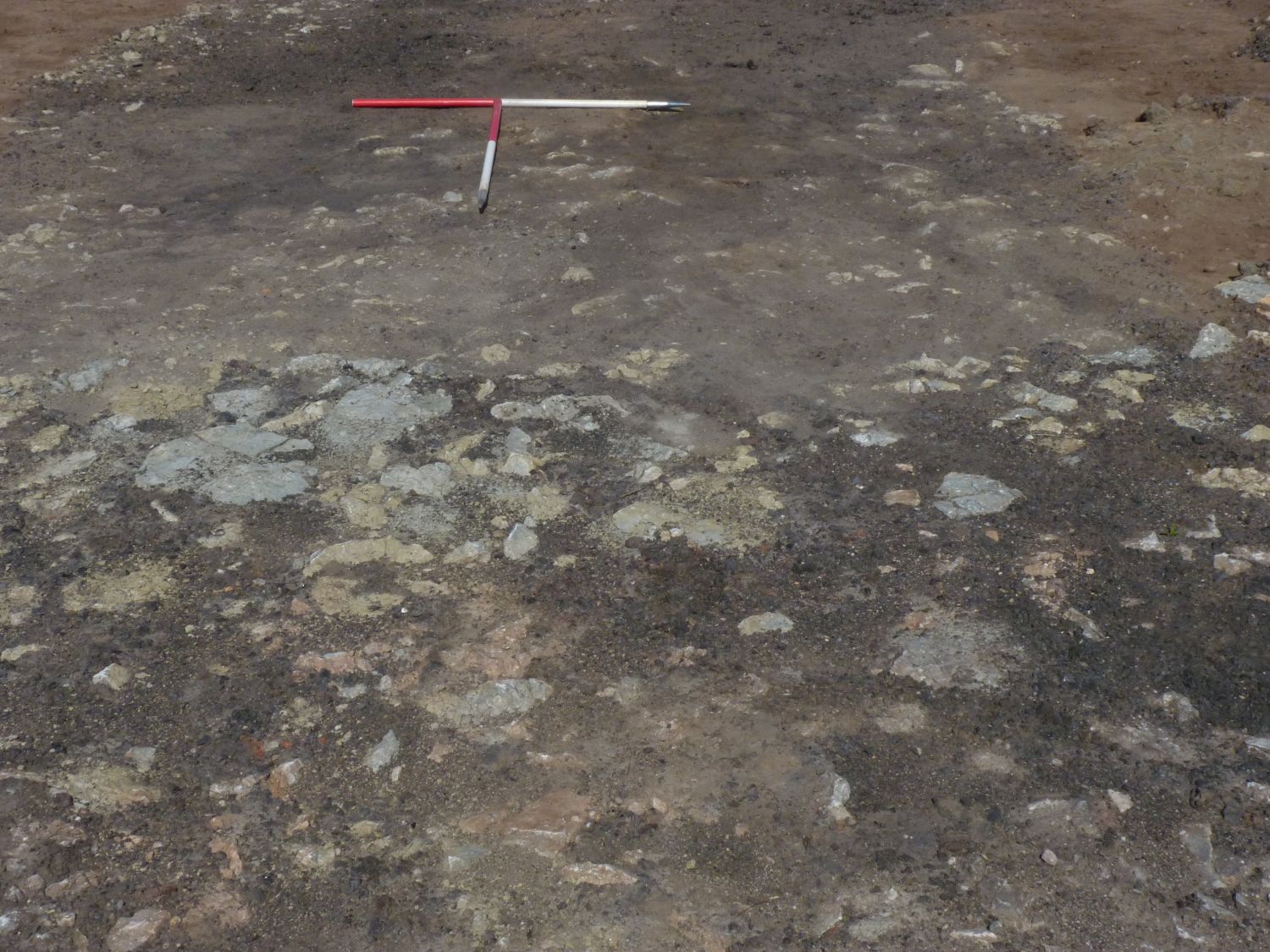
During the course of our investigations we identified the locations of a number of fire tanks/baskets evidenced by concrete slabs and a spread of thick wire fragments. A circular track constructed of ash and clinker approximately 3m wide was recorded lying within the decoy field. Radiating outwards from the track were a number of metal conduits containing electrical wiring suggesting that the track encircled a probable junction or fuse-box for the igniters.
Such sites would have been under the control of the RAF, and this was confirmed during the excavation of a waste pit adjacent to the trackway which contained fragments of ceramic dinner plates with the RAF motif. A single RAF tunic button was also recovered during the metal-detector survey.
Due to the nature of the site, particular attention was paid to the potential for unexploded ordnance (UXO) to be present, the RAMS for the project reflecting this. The Arthian team also provided toolbox talks to familiarise site workers on what to look out for and procedures to be followed should suspected ordnance be encountered.
During the course of the investigation a number of potential UXO objects were identified, one of which was confirmed as a detonator and which was safely disposed of by Arthian staff in co-operation with one of our approved UXO contractors.
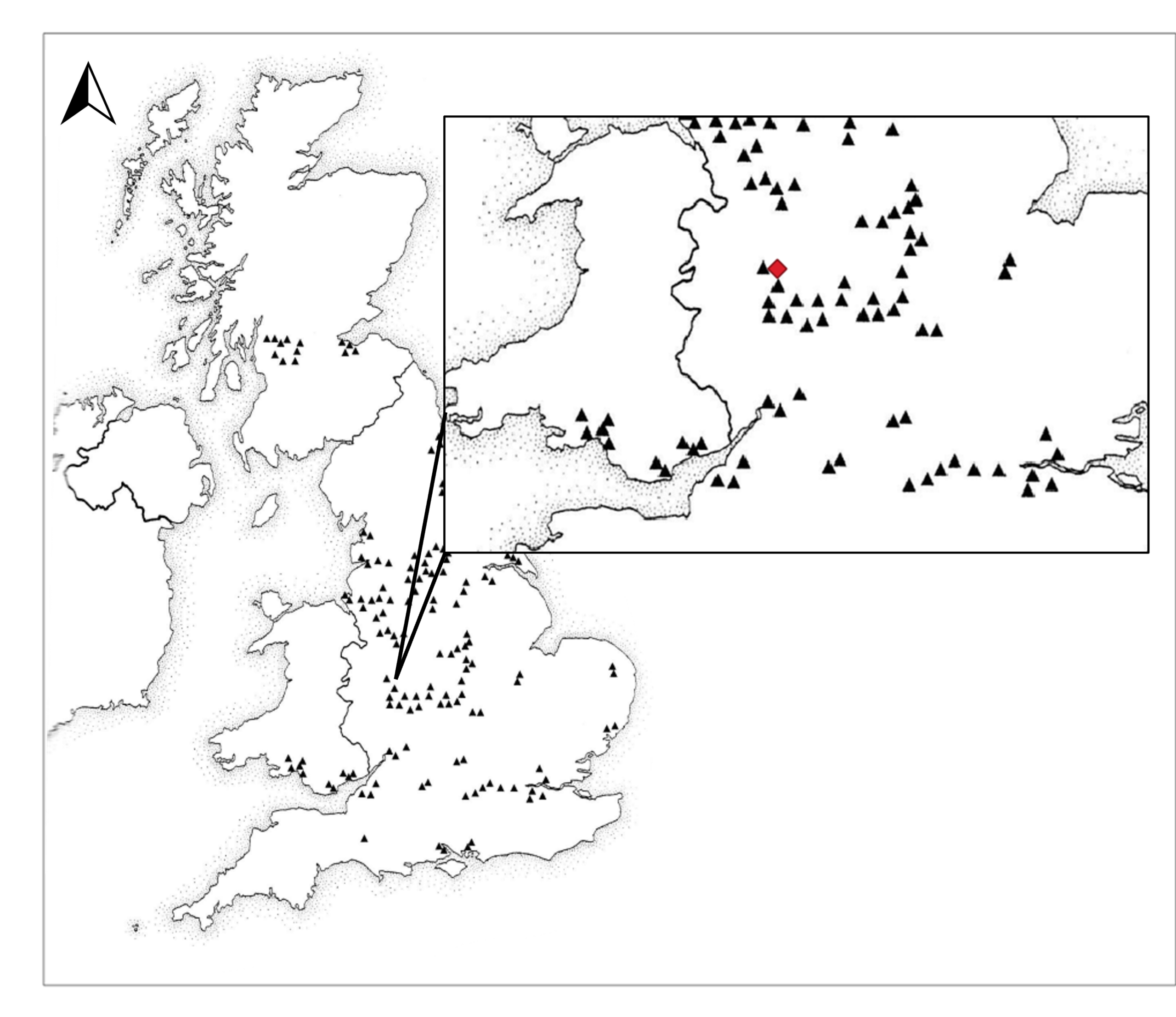
This discovery further informed the location of Starfish Sites across the UK, and added value to the project for the client, by shedding further light on local and recent history.
Our Latest Projects


Get in Touch
We’d love to hear from you – whether you have a question, a project in mind, want to explore job opportunities, or just want to say hello.