The New NPPF: What Architects Need to Know
2nd September 2026

Much of the discussion surrounding the update has focused on accelerating housing delivery and unlocking economic growth, but the implications extend far beyond planning policy alone.
At its core, the revised framework places greater emphasis on sustainable development, deliverability, infrastructure provision and making more efficient use of land. It reinforces support for growth in well-connected locations, strengthens the relationship between development and infrastructure, and continues to prioritise climate resilience, biodiversity enhancement and environmental stewardship.
For architects, these changes are likely to influence not just where development takes place, but how schemes are conceived, designed and delivered. As policy increasingly prioritises connected, resilient and sustainable places, design teams will need to demonstrate how projects respond to both local context and wider strategic objectives. The following perspectives explore what the updated NPPF could mean in practice across planning, transport, environmental and technical disciplines.
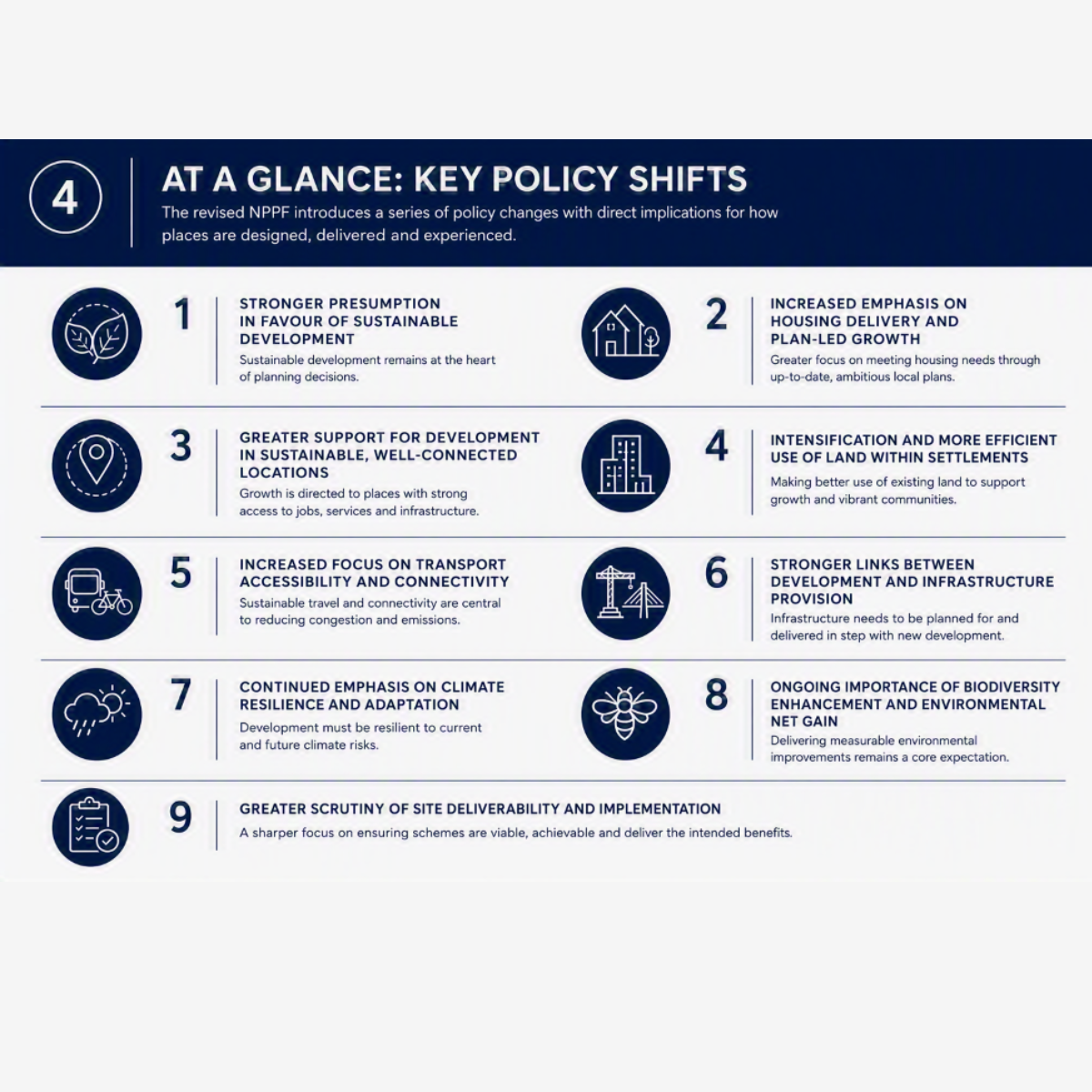
At a Glance: Key Policy Shifts
- Stronger presumption in favour of sustainable development
- Increased emphasis on housing delivery and plan-led growth
- Greater support for development in sustainable, well-connected locations
- Intensification and more efficient use of land within settlements
- Increased focus on transport accessibility and connectivity
- Stronger links between development and infrastructure provision
- Continued emphasis on climate resilience and adaptation
- Ongoing importance of biodiversity enhancement and environmental net gain
- Greater scrutiny of site deliverability and implementation

Planning: Designing for Deliverability
“The revised NPPF places a stronger emphasis on deliverability, and that has important implications for design teams. Great architecture has always needed to balance vision with practical constraints, but the latest changes reinforce the need for schemes that can clearly demonstrate their ability to be realised. For architects, that means engaging with planning, environmental and technical considerations much earlier in the design process. The projects most likely to succeed will be those where placemaking ambitions are supported by a robust understanding of site opportunities, infrastructure requirements, and policy objectives from the outset.”
James Nicol, Technical Director, Planning
Transport Planning: Connecting Places, Design and Delivery
“The revised NPPF reinforces the importance of considering transport from the earliest stages of development. For architects, this creates an opportunity to think beyond individual developments and consider how they connect with the wider movement network from site selection and masterplanning through to construction and occupation. This means creating layouts that prioritise walking, wheeling and cycling, support public transport and remain safe, inclusive and accessible for all users.
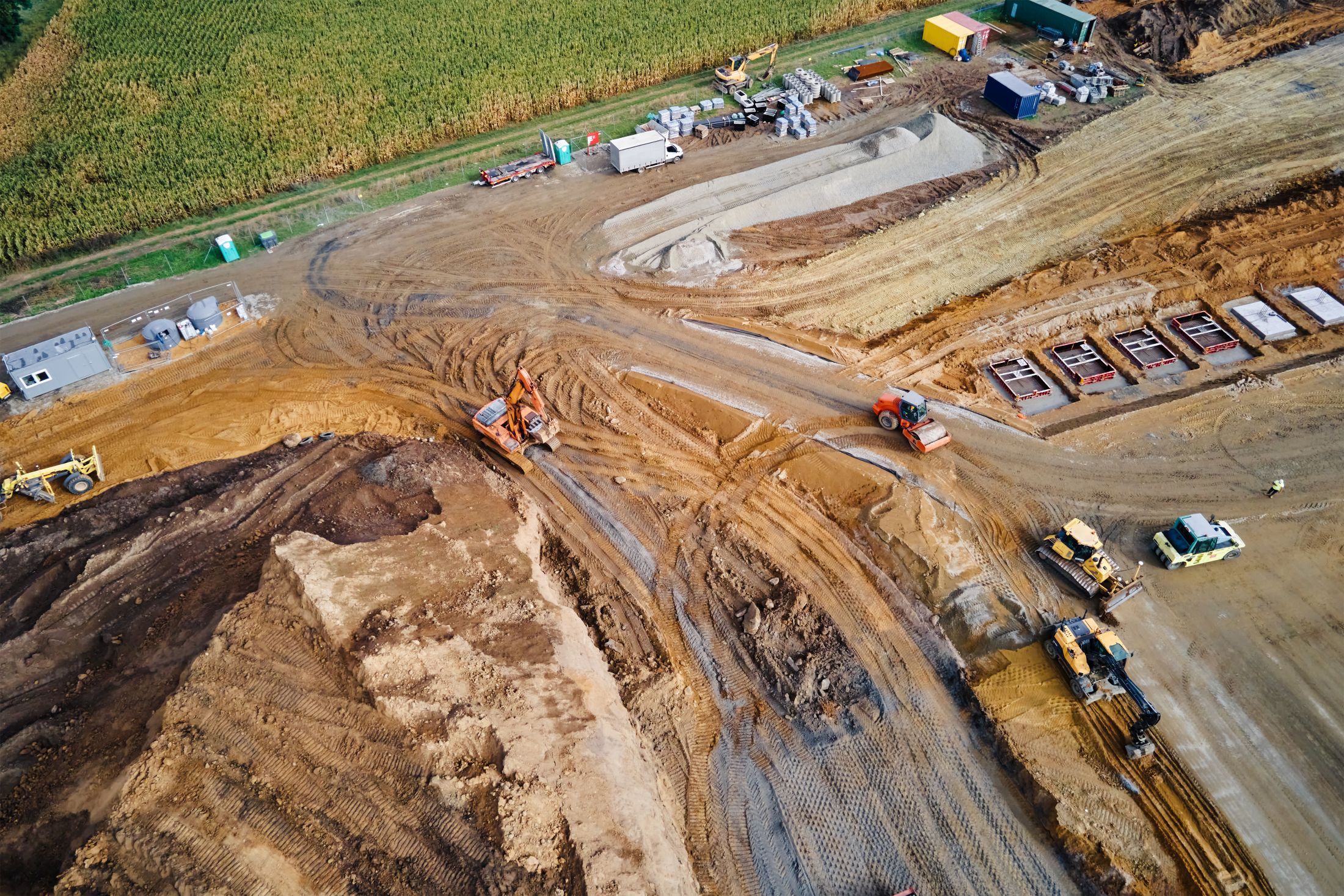
It also means considering from the outset how the development will be delivered. Access for construction vehicles, delivery routes, vehicle manoeuvring, temporary arrangements for pedestrians and cyclists, compounds and development phasing can all influence the design and should not be left until after planning permission. Early collaboration between architects, transport planners and construction advisers helps ensure proposals function effectively during construction and occupation, while creating places that are attractive, accessible and sustainable.”
Philip Craig, Principal Transport Planner, Planning

Flood Risk: Designing for a Changing Climate
“Climate resilience is becoming an increasingly important part of good design. The updated NPPF reinforces the need for developments that can respond to the realities of a changing climate, including more frequent and intense rainfall events. For architects, this presents an opportunity to integrate flood resilience, sustainable drainage and water-sensitive design principles into projects from the earliest stages. Schemes that successfully work with natural processes are often not only more resilient, but also deliver stronger placemaking and environmental outcomes.”
Josh Rigby, Director, Environmental Assessment

Biodiversity Net Gain: Nature as a Design Driver
“The direction of planning policy is clear: biodiversity and environmental enhancement should be embedded within development, and not an afterthought. Clearer parameters now provide a framework for innovation and interdisciplinary collaboration; for architects, this means treating ecology as a design opportunity rather than a compliance requirement. By integrating green infrastructure, habitat creation and biodiversity enhancement from the outset, projects can deliver measurable environmental benefits while also creating healthier, more attractive places for people to live and work.”
Nick Masters, Principal Ecologist

Arboriculture: The Value of Existing Green Assets
“As development pressures grow and sites become increasingly complex, existing trees and green infrastructure should be seen as assets that shape design rather than constraints that limit it. Mature trees contribute to character, biodiversity, climate resilience and wellbeing, all priorities that align closely with the updated NPPF. Early arboricultural input enables design teams to understand what makes a site unique, helping to create proposals that respond positively to their context while delivering long-term environmental value.”
Antony Price, Principal Consultant, Arboriculture & Forestry
Heritage: Character as a Catalyst for Design
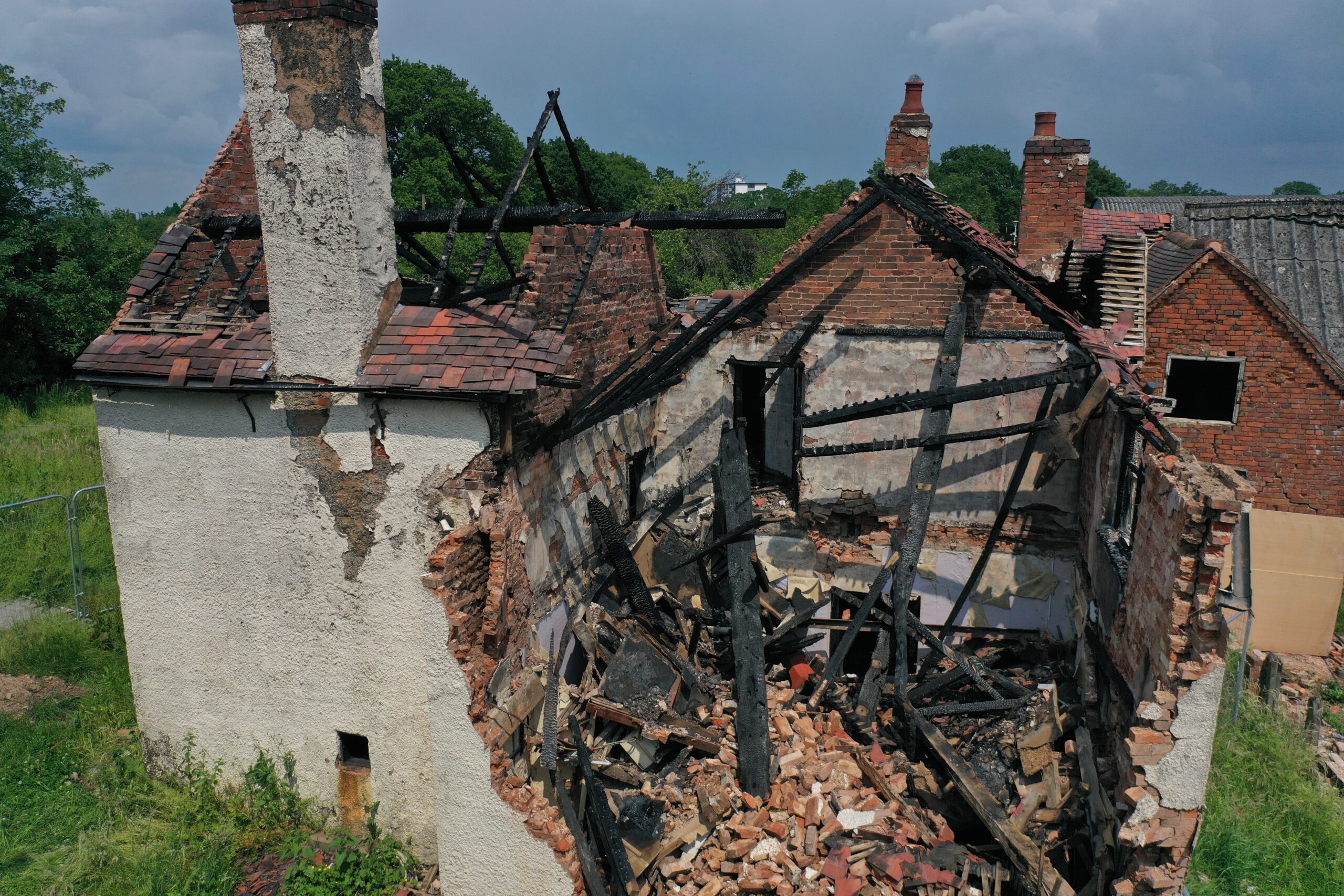
“The latest NPPF continues to reinforce the importance of understanding significance and local character at an early stage. For architects, heritage should not be viewed solely as a planning consideration, but as a rich source of inspiration that can inform contemporary design. The strongest schemes are often those that respond thoughtfully to their historic context, creating developments that feel rooted in place while delivering the growth and change that communities need.”
Peter Klemen, Principal Heritage Consultant

Acoustics: Small Words, Big Design Implications
“The recent NPPF update is a reminder that small changes in policy language can have significant implications for development and design. The shift from ‘avoid’ to ‘not result in’ may appear subtle, but it has the potential to influence how noise impacts are assessed and interpreted through the planning process. For architects, understanding these nuances is important because acoustic design is often closely linked to layout, building form, façade design and placemaking. The earlier these considerations are understood, the greater the opportunity to create environments that are both policy-compliant and enjoyable for the people who use them.”
Chris Turner, Technical Director, Acoustics, Noise & Vibration
A Multidisciplinary Approach Will Be Key
While the revised NPPF contains a number of individual policy changes, the overarching direction of travel is clear. Successful development is increasingly dependent on the ability to balance growth, sustainability, infrastructure, environmental stewardship and placemaking within a single coherent vision.
For architects, this means technical considerations can no longer be treated as standalone workstreams or addressed only at the point of planning submission. Issues such as transport connectivity, flood resilience, biodiversity enhancement, tree retention, heritage significance and acoustic performance all have a direct influence on design decisions from the earliest stages of project development.
The strongest schemes will be those where architects work collaboratively with planners, engineers and environmental specialists from the outset, allowing opportunities and constraints to inform the design process rather than react to it. Early multidisciplinary engagement not only helps reduce risk and improve project certainty, but often leads to more creative, resilient and contextually responsive design solutions.
Ultimately, the revised NPPF reinforces a principle that many architects already recognise: the best places emerge when design excellence is supported by a thorough understanding of policy, infrastructure, environment and community context. As the planning system continues to evolve, integrated thinking will be essential to delivering projects that are both compliant and genuinely successful.