The Challenge
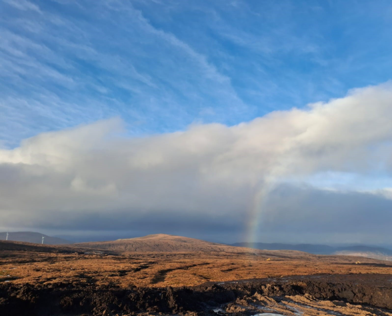
This project, undertaken at the Aberarder Wind Farm, involved the construction of 11 turbine bases and associated access tracks. The scope of works included insitu water quality monitoring and the provision of a fulltime Environmental Clerk of Works (EnCoW) throughout the development phase. Responsibilities included supporting the contractor with preparations for the winter shutdown over the Christmas period and ensuring full compliance with all site licences, environmental permits, and consent conditions.
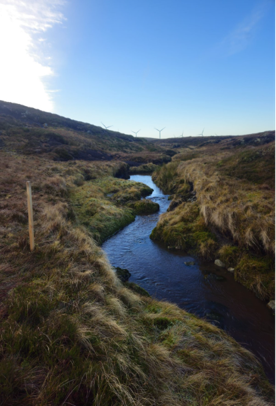
Due to the site’s challenging conditions, a full‑time EnCoW presence was required. The steep topography and multiple intersecting watercourses significantly increased the risk of sediment mobilisation and potential pollution events. To effectively manage these risks, daily turbidity monitoring was undertaken and recorded within a bespoke tracking tool.
Extensive earthworks were undertaken across the site, resulting in large areas of exposed soils. The underlying geology, predominantly glacial till and peat, further increased the susceptibility to erosion and sediment run‑off, necessitating robust environmental controls throughout construction.
The site also supported protected species, including otter and water vole. Ecological exclusion zones were established in proximity to two turbine locations, which introduced additional challenges in managing discoloured run‑off. Due to the sensitivity of these areas, enhanced mitigation measures were implemented to prevent disturbance and ensure there were no adverse impacts on the protected species or their habitats.
The Solution
The EnCoW undertook daily site inspections, during which a minimum of three turbidity samples were collected, including a control sample taken from outside the red‑line boundary to provide a robust baseline for comparison. Inspections focused on identifying high‑risk areas for potential run‑off, with particular attention to exposed soils, steep gradients, and locations adjacent to watercourses. The EnCoW also assessed the condition and effectiveness of existing mitigation measures such as silt fencing, check dams, and settlement ponds to determine whether maintenance, reinforcement, or replacement was required. Where elevated risks of sediment mobilisation or run‑off were identified, the EnCoW provided recommendations for the installation of additional interventions to ensure continued environmental protection.
A bespoke water monitoring document was maintained throughout the project. It included a comprehensive log of all turbidity samples, supported by daily and weekly weather summaries to contextualise fluctuations in water quality against the stipulated conditions. The document also captured detailed notes from all watercourse inspections undertaken by both the EnCoW and site personnel, ensuring consistency and traceability across the monitoring programme. This centralised record proved essential for demonstrating compliance and for identifying developing trends that required attention.
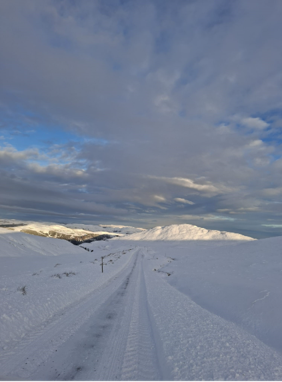
In the lead‑up to the winter shutdown, the EnCoW conducted targeted inspections to identify outstanding actions listed within the shutdown report and highlight where final adjustments were still required. This proactive approach was essential to ensure that all mitigation measures were adequately implemented before the period of limited site supervision, thereby reducing the risk of pollution incidents. Particular focus was given to stabilising exposed soils, ensuring drainage was functioning effectively, and confirming that all temporary controls were resilient to prolonged wet or freezing conditions.
When installing ditching near turbine bases, spatial constraints were encountered due to the proximity of ecological exclusion zones. To avoid disturbance, no plant or personnel were permitted to enter these protected areas. As a result, the ditching was positioned as far from the exclusion zone boundaries as reasonably practicable, while still achieving effective water management. This required careful planning and collaboration between the EnCoW and construction teams to balance ecological protection with engineering requirements.
Our Latest Projects
Get in Touch
We’d love to hear from you – whether you have a question, a project in mind, want to explore job opportunities, or just want to say hello.