The Challenge
A South West Water Sewer Pumping Station (SPS), in North Devon, will imminently require upgrade with the installation of new equipment to meet modern requirements.
Arthian were requested to design the site access road, to provide suitable access for construction traffic, delivery vehicles and provide a long-term resilience to ensure access for on-going maintenance.
The site is located within the flood plain of the River Caen, adjacent to a Site of Special Scientific Interest (SSSI), and situated alongside an active military base, factors which needed to be considered in the design process.
The Solution
The project was completed in several phases:
- Preliminary Route Design & feasibility
- Specification of Ground Investigation
- Detailed Design
The preliminary design that Arthian proposed was a geo-grid reinforced granular access track utilising the Client’s preferred geogrid supplier and an alignment agreed with the landowner. As the proposed route is situated within a flood plain, it was discussed whether the finished levels should be set above the flood levels, to maintain access during storm events. It was however agreed with the client, that within the limits of the vertical geometry design, the track should be finished as close to existing ground as possible. The client’s priority was to minimise the effect on the local scenery, and reduce the impact on the landowner, and accept the occasional loss of access during flood events.
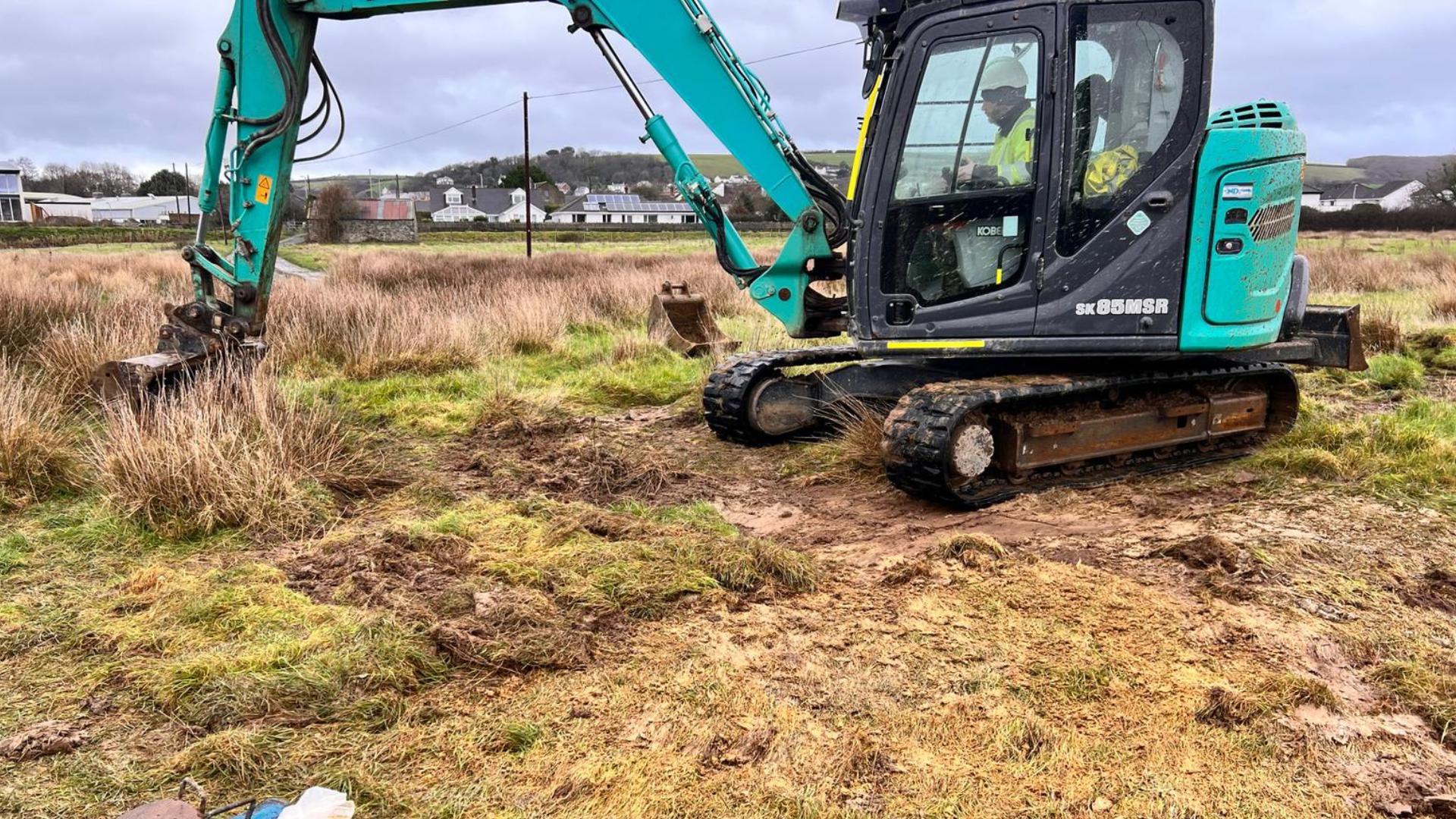
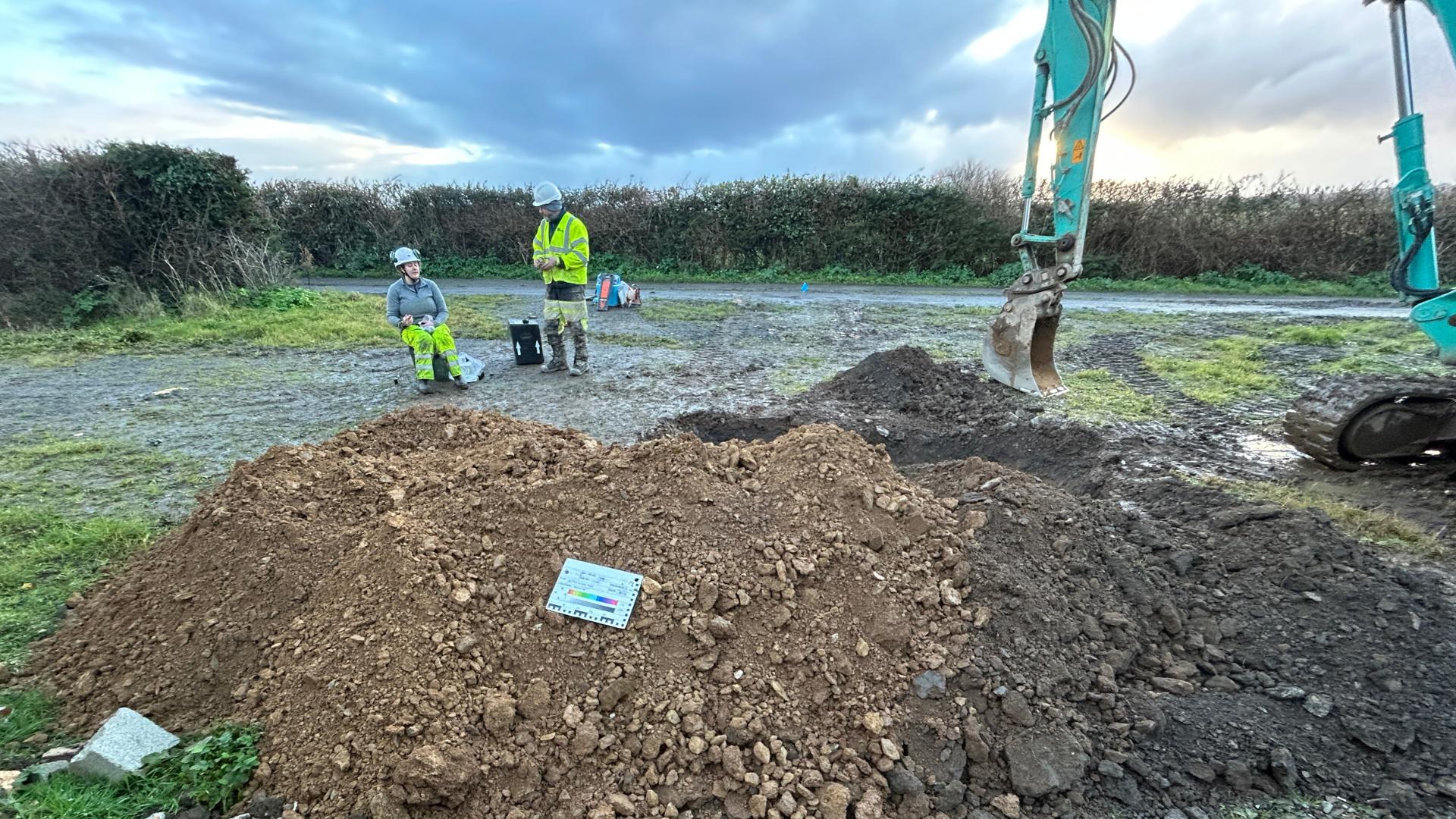
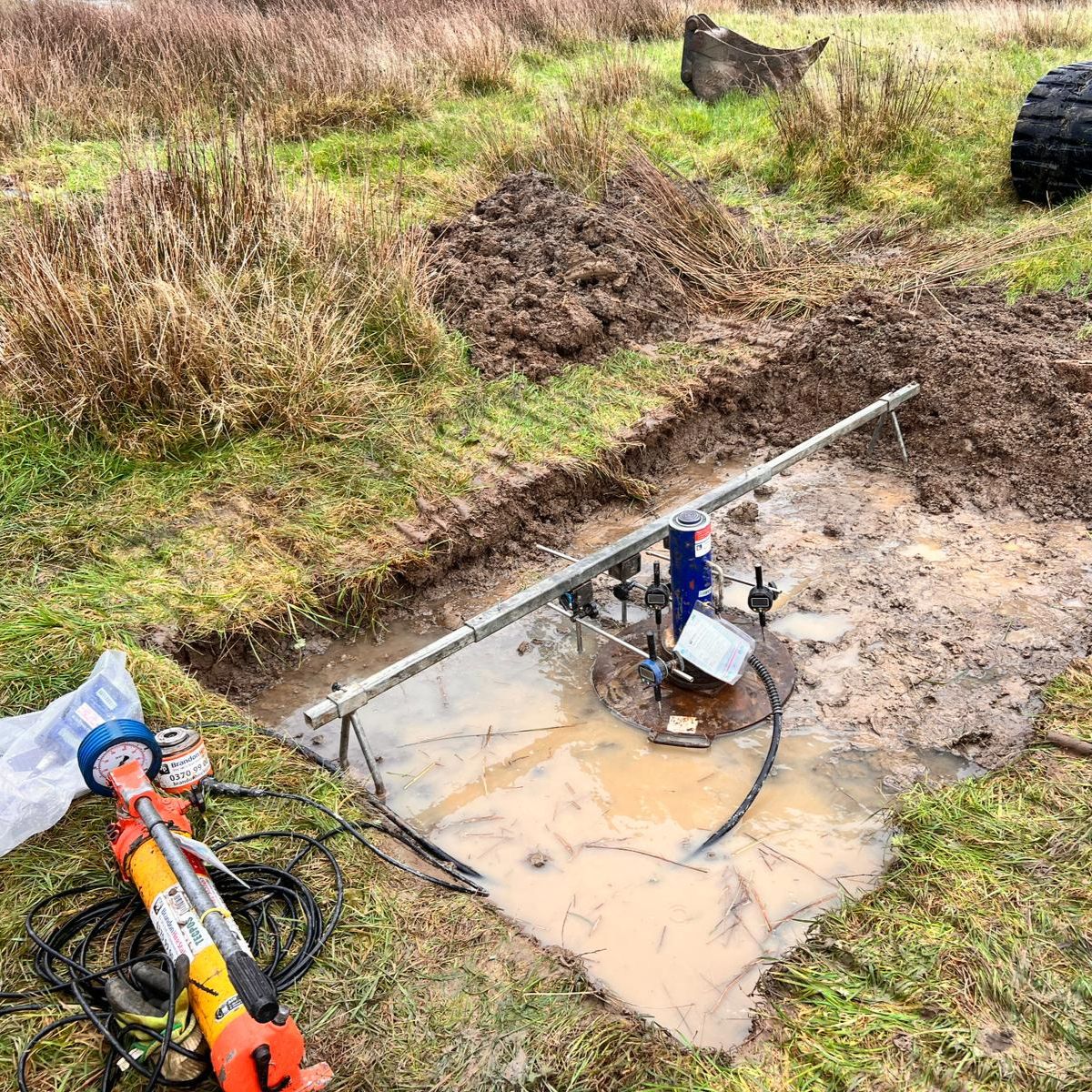
Once the route was agreed, the geotechnical team designed the Ground Investigation (GI) scope. This comprised several trial pits in-situ testing (plate bearing test and dynamic cone penetrometer) and scheduling of relevant lab testing at representative intervals along the proposed route. This GI identified the ground conditions and informed the design build-up of the access track and the geo-grid specification.
On receipt of the GI, the detailed design was developed with consideration for the construction and operational vehicle movements, loading and required geometry. The GI results identified local areas of soft ground. Alternative designs were developed in case this soft ground is encountered more regularly along the proposed route.
The detailed design also included surface water drainage design, which focussed on diverting existing land drains around the works whilst minimising the effect of the scheme on the local hydrology. The drainage design also aimed to reduce the ground water during construction, to reduce the risk of worsening the soft ground conditions. Arthian designed two culverts for the site, one upgraded and one new. Using InfoDrainage software, Arthian analysed the local rainfall criteria for the catchment area, identified a suitable pipe diameter and provided construction details to meet current best practice, including CIRIA SuDS guidance.
Our Latest Projects

Get in Touch
We’d love to hear from you – whether you have a question, a project in mind, want to explore job opportunities, or just want to say hello.