
Peatlands play a critical role in climate regulation, biodiversity, and water quality. When degraded, they become significant sources of greenhouse gas emissions. Restoration of these landscapes is increasingly recognised as a priority within nature-based solutions and national net-zero strategies. This case study outlines a typical approach to delivering end-to-end peatland restoration services, from feasibility assessment to post-restoration monitoring.
The image below demonstrates an area of heavily degraded blanket bog, where deep erosion gullies have formed due to historic drainage and drying of the peat. Exposed peat surfaces, seen along the gully edges, are vulnerable to further erosion and carbon loss. This type of landscape is a key target for peatland restoration, with typical interventions including re-profiling the gully sides, installing dams to slow water flow, and re-vegetating bare peat with mosses and heather brash to stabilise the surface.
Feasibility & Baseline Assessment
The initial stage of the restoration process involves a detailed feasibility assessment to determine the site’s suitability for intervention. This includes comprehensive ecological and hydrological surveys to establish baseline conditions, with key indicators such as vegetation composition, peat depth, erosion extent, and drainage infrastructure systematically recorded.
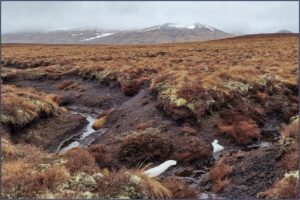
Photo 1: Exposed peatland in Scotland, where water erosion has created channels and dried out the surface. Restoration work is often needed in areas like this to reduce carbon loss and help the landscape recover.
Restoration Planning & Delivery Support
Following feasibility, a detailed Peatland Restoration Plan is prepared. This includes mapped restoration interventions such as installing dams (peat, timber, plastic, or stone), grip blocking, bund construction, rewetting, or reprofiling of eroded peat surfaces. The plan provides clear specifications for restoration techniques and regulatory compliance considerations. During restoration works, on-site environmental support such as Ecological Clerk of Works (ECoW) is provided to monitor implementation, ensure adherence to best practice, and avoid unintended ecological impacts.
Post-Restoration Monitoring
After implementation, monitoring is undertaken to assess restoration success and inform adaptive management. Monitoring methods may include fixed-point photography, dip well installation to track water table levels, drone imagery, and vegetation surveys. Results are used to report progress, demonstrate compliance, and guide any future interventions if needed.
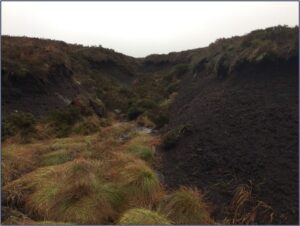
Photo 2: Large actively eroding gully.
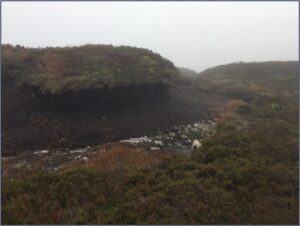
Photo 3: Actively eroding peat hag.
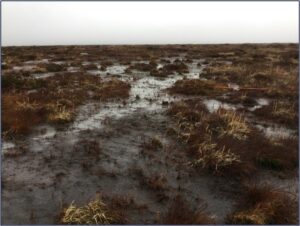
Photo 4: Flat area of patchy bare peat.
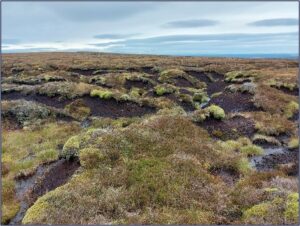
Photo 5: Hagged area of eroding peat.
The collected data underpins the development of a Site Management Plan and Restoration Proposals tailored to the site’s specific characteristics. Carbon emissions are estimated using standardised methodologies to quantify potential greenhouse gas savings resulting from restoration. In parallel, cost estimates and risk assessments are prepared to inform project planning and investment decisions, covering all aspects of implementation, monitoring, and long-term management. The assessment ultimately determines the restoration viability of the site and identifies the potential for delivering measurable benefits for biodiversity, water quality, and carbon sequestration.
Our Latest Projects
Get in Touch
We’d love to hear from you – whether you have a question, a project in mind, want to explore job opportunities, or just want to say hello.