Services

From strategy to delivery, our experts support complex challenges across the entire lifecycle of a project.

  • Environment
  • Engineering
  • Planning Consultancy
  • Safety
  • Sustainability Consulting
  • Net Zero and Decarbonisation
Arboriculture & Forestry Consultancy Services
Acoustics, Noise & Vibration Consultants
Air Quality
Archaeology & Heritage
Contaminated Land & Remediation
Ecology & Biodiversity
Environmental Impact Assessment
Construction Environmental Management
Environmental Permitting
Flood Risk
Glint & Glare
Hydrology & Hydrogeology
Landscape & Visual
Soils & Peat
Waste
Explore Environment
Civil Engineering
Structural Engineering
Geotechnical Engineering
Temporary & Enabling Works
Process Engineering
Energy Engineering
Energy Analysis
Environmental Engineering
Water & Wastewater
Surveying
Asset Integrity
Explore Engineering
Planning Consultancy
Transport Planning
Explore Planning Consultancy
Process Safety Consultants
COMAH Compliance Consultants
DSEAR & ATEX Compliance Services
HAZOP Consultancy
Machinery Safety
Process Safety Training Consultants
Health & Safety
Occupational Hygiene Consultants
Construction Design & Management (CDM)
Explore Safety
Energy Compliance
Environmental, Health & Safety (EHS) Legal Compliance Management
ISO Management Systems Services
Sustainability Strategy, Reporting and Verification
Environmental, Social, Governance (ESG)
Sustainability Programme Delivery Support
Sustainability Skills and Training
Explore Sustainability Consulting
Product Carbon Footprint Consultants
Buildings & Infrastructure Carbon Footprint & Reduction
Net Zero Strategy & Climate Transition Plans
Carbon Verification & Assurance
Energy Generation Feasibility Design
Industrial & Commercial Energy Solutions
Public Sector Decarbonisation Solutions
Net Zero and Decarbonisation Training
Carbon Footprint & Reporting
Explore Net Zero and Decarbonisation

hello@arthian.com

+44 (0) 3301 200 151

  • Office Locations
  • Resources
  • Services
    • Public Sector
  • Sectors
  • Projects
  • About Us
  • Training
  • Careers
  • Insights
  • Contact Us

Services

  • Environment
  • Engineering
  • Planning Consultancy
  • Safety
  • Sustainability Consulting
  • Net Zero and Decarbonisation

Environment

  • Arboriculture & Forestry Consultancy Services
  • Acoustics, Noise & Vibration Consultants
  • Air Quality
  • Archaeology & Heritage
  • Contaminated Land & Remediation
  • Ecology & Biodiversity
  • Environmental Impact Assessment
  • Construction Environmental Management
  • Environmental Permitting
  • Flood Risk
  • Glint & Glare
  • Hydrology & Hydrogeology
  • Landscape & Visual
  • Soils & Peat
  • Waste

Engineering

  • Civil Engineering
  • Structural Engineering
  • Geotechnical Engineering
  • Temporary & Enabling Works
  • Process Engineering
  • Energy Engineering
  • Energy Analysis
  • Environmental Engineering
  • Water & Wastewater
  • Surveying
  • Asset Integrity

Planning Consultancy

  • Planning Consultancy
  • Transport Planning

Safety

  • Health & Safety
  • Occupational Hygiene Consultants
  • Construction Design & Management (CDM)
  • Process Safety Consultants
  • Process Safety Training Consultants
  • COMAH Compliance Consultants
  • DSEAR & ATEX Compliance Services
  • HAZOP Consultancy
  • Machinery Safety

Sustainability Consulting

  • Energy Compliance
  • Environmental, Health & Safety (EHS) Legal Compliance Management
  • ISO Management Systems Services
  • Sustainability Strategy, Reporting and Verification
  • Environmental, Social, Governance (ESG)
  • Sustainability Programme Delivery Support
  • Sustainability Skills and Training

Net Zero and Decarbonisation

  • Public Sector Decarbonisation Solutions
  • Industrial & Commercial Energy Solutions
  • Energy Generation Feasibility Design
  • Net Zero Strategy & Climate Transition Plans
  • Carbon Footprint & Reporting
  • Buildings & Infrastructure Carbon Footprint & Reduction
  • Carbon Verification & Assurance
  • Net Zero and Decarbonisation Training
  • Product Carbon Footprint Consultants
  • Services
    • Public Sector
  • Sectors
  • Projects
  • About Us
  • Training
  • Careers
  • Insights
  • Contact Us

  • Office Locations
  • Resources

hello@arthian.com

+44 (0) 3301 200 151

Home| Insights| How Manufacturers Can Build a Scalable EPD Portfolio
Decarbonisation
Environmental Compliance
Environmental Permitting
Planning

How Manufacturers Can Build a Scalable EPD Portfolio

28th November 2025

How Manufacturers Can Build a Scalable EPD Portfolio

Leading manufacturers are building scalable EPD portfolios – structured, repeatable, multi-product declarations capable of supporting an entire product range.

As the UK construction industry accelerates its transition to low-carbon delivery, manufacturers are under growing pressure to provide transparent, verified product-level data. Environmental Product Declarations (EPDs) have emerged as the recognised mechanism for this, but the industry has now moved beyond single-EPD development.

This article outlines why EPD portfolios matter, the operational barriers manufacturers face, and the frameworks and best practices needed to deliver scalable EPD production.

 

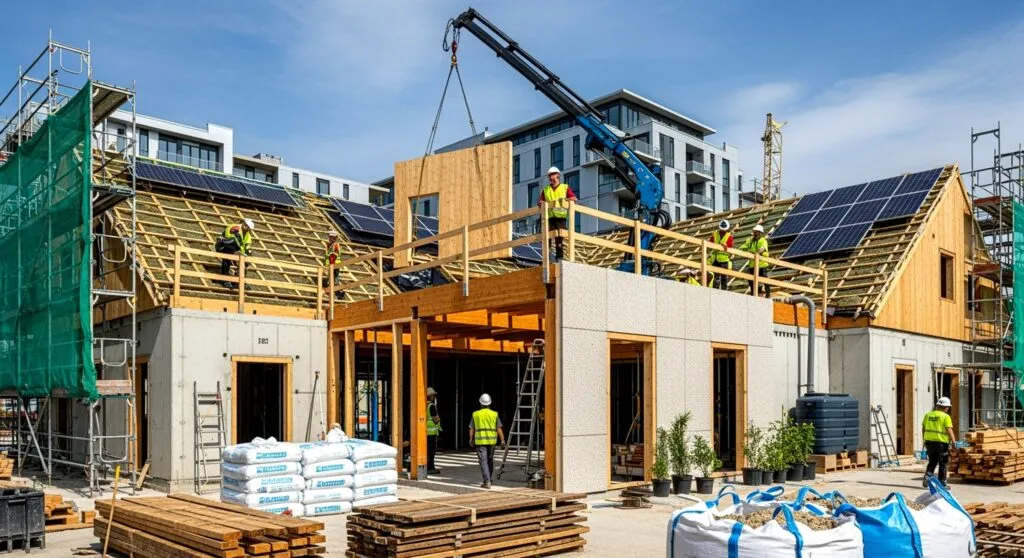
Scalable EPDs 7
Scalable EPDs 2

Why Manufacturers Are Scaling Up EPD Production

EPD demand is no longer driven by sustainability teams alone. It has become a cross-business requirement influenced by procurement, sales, technical, and regulatory drivers.

Procurement Demands

Contractors and developers increasingly require verified EPDs as part of tender submissions. Many now request:

  • A minimum percentage of products with EPDs
  • Verified (not industry-average) values
  • EN 15804+A2 compliant data
  • WLCA-ready datasets

Manufacturers without EPDs – or with only a handful – are losing visibility in specifications.

Supply Chain Pressure

Designers, QS teams and engineers require EPD data to complete Whole Life Carbon Assessments (WLCA). Their need for accurate, product-specific information drives pressure upstream. Manufacturers now face direct requests for:

  • Variant-specific carbon values
  • Digital datasets compatible with WLCA software
  • Transparency across A1–A3 and A4 modelling

Net Zero Commitments

Many manufacturers have set corporate net zero targets aligned with:

  • Science Based Targets (SBT) commitments
  • PAS 2080
  • Scope 3 GHG emissions reduction pathways

EPDs provide the most accurate and standardised method for understanding, reporting and reducing embodied carbon across a product range.
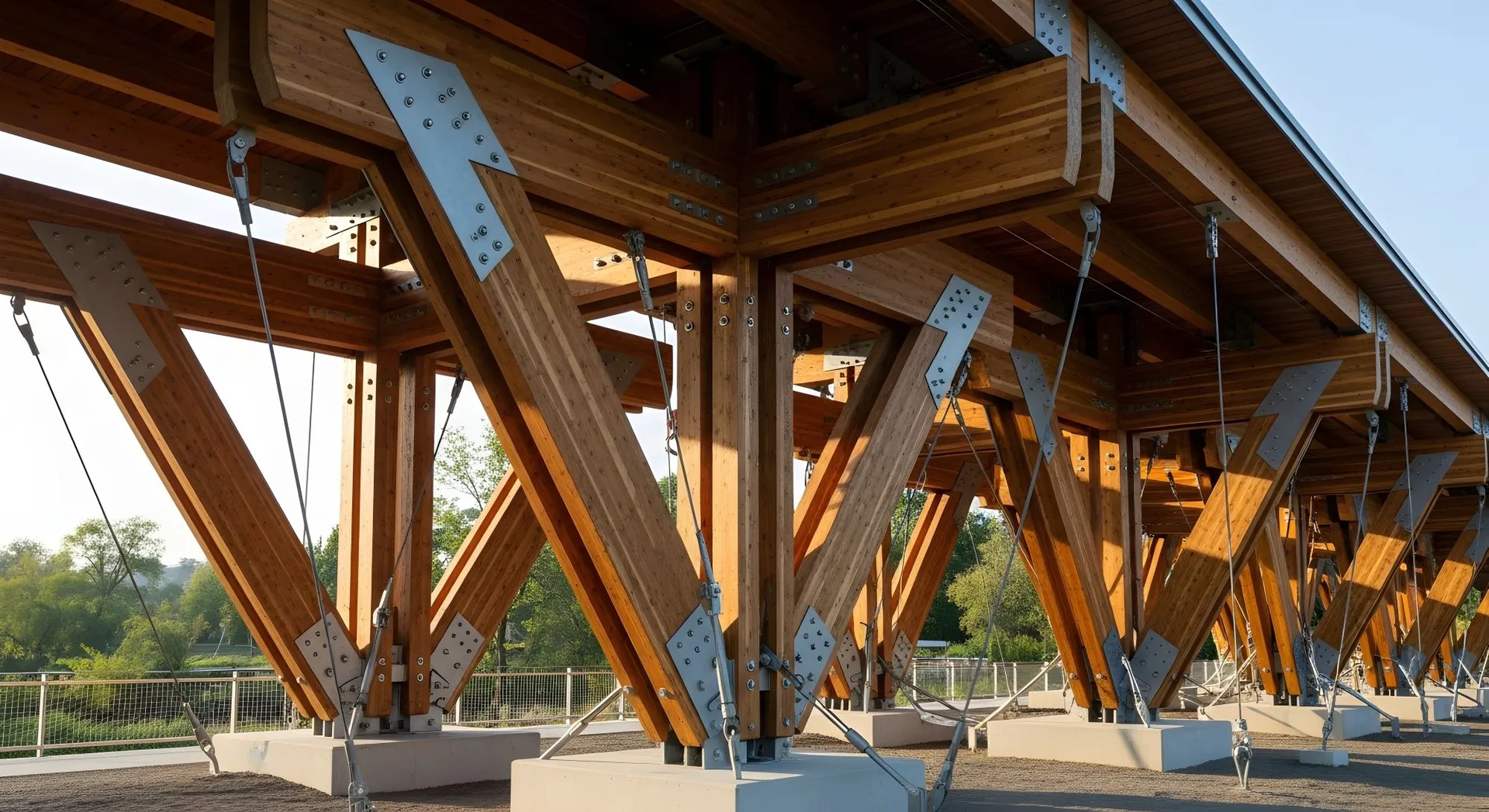
Scalable EPDs 4

What an EPD Portfolio Actually Looks Like

A scalable EPD portfolio expands beyond single declarations and incorporates structured modelling across product variations.

Multiple Product Lines

Manufacturers often require EPDs across:

  • Core product families
  • Sub-product groups
  • Bespoke products
  • New materials introduced into the market

Variant Modelling

Construction products frequently come in hundreds or thousands of variations. A scalable EPD approach uses:

  • Parametric LCA models
  • Variant rulesets
  • Configurable datasets

This enables EPDs to be generated for groups of variants rather than modelled individually.

Verified vs non-verified EPDs

A mature EPD portfolio includes:

  • Verified EPDs for high-demand commercial products
  • Non-verified carbon datasets (pre-EPD) for early design stage conversations
  • Modular LCA results for internal innovation and R&D

The goal is flexibility – providing the right level of detail at the right time in the sales cycle.

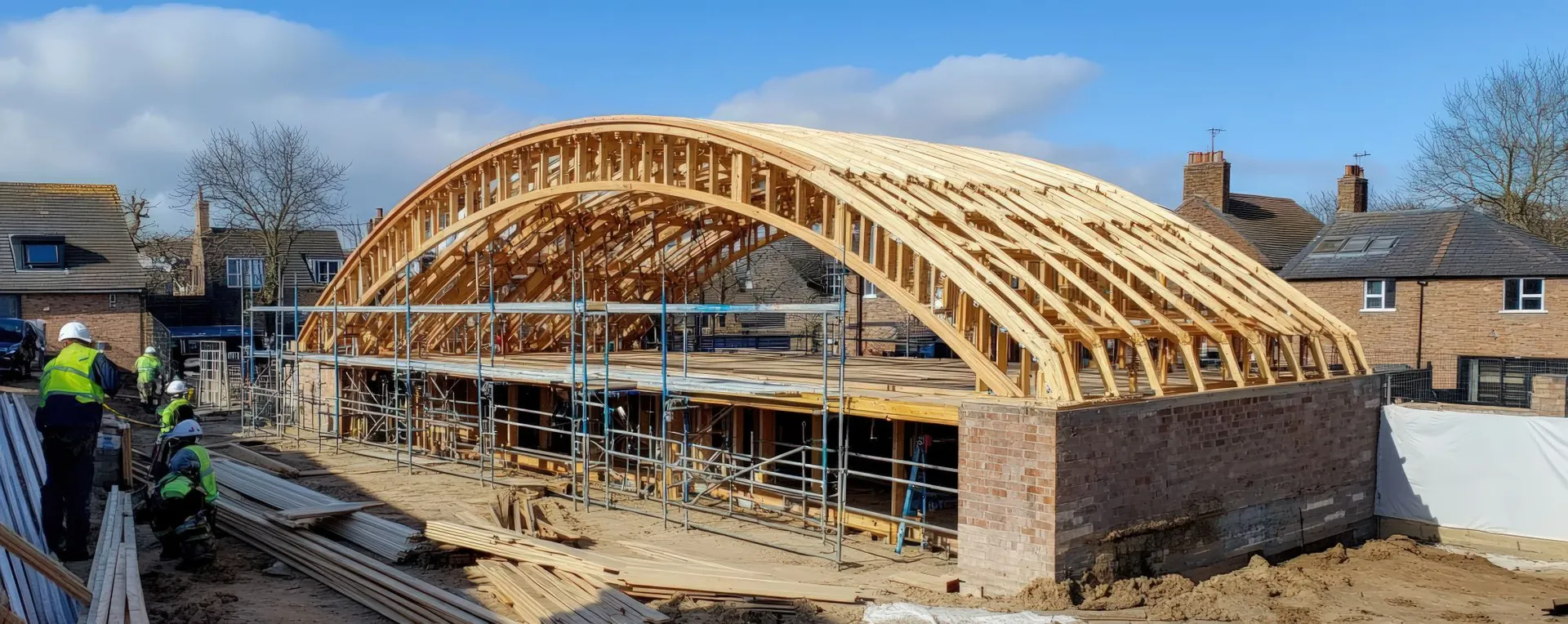
Scalable EPDs 5

The Barriers to Scaling EPDs

Despite rising demand, many manufacturers struggle to produce EPDs efficiently at scale.

Data Inconsistencies

Product lines often use different:

  • ERP systems
  • Bills of materials
  • Data structures
  • Production datasets

This makes lifecycle modelling inconsistent and time-consuming.

Disconnected Systems

Carbon data is typically stored across:

  • Spreadsheets
  • Manufacturing systems
  • Supplier datasets
  • Energy reports
  • QA systems

LCA modellers spend significant time reconciling inconsistent information.

Manual Processes

Many EPDs are still produced via:

  • Manual data gathering
  • Spreadsheet-based modelling
  • One-off verification processes

This is not scalable beyond a small number of EPDs.

Cost Bottlenecks

Manufacturers often face:

  • High software licence fees
  • Time-intensive verification
  • Repetition of modelling work across similar products

Without a portfolio approach, EPD costs grow exponentially.

Scalable EPDs 3
Scalable EPDs 1

A Framework for Scalable EPD Production

Leading UK manufacturers are adopting a structured approach that enables repeatable, efficient EPD generation.

Data Governance

Establish a cross-business process for:

  • Standardising input data formats
  • Centralising manufacturing datasets
  • Ensuring version control
  • Setting data quality thresholds

Data governance eliminates inconsistencies and accelerates modelling.

Master PCR Strategy

Most manufacturers require multiple PCRs. A scalable portfolio needs:

  • A master PCR mapping strategy
  • Clear allocation rules
  • Harmonised approaches across product groups
  • Alignment with the most relevant programme operator requirements

This ensures consistency and comparability across declarations.

Standardised Modelling Rules

Create a technical rulebook covering:

  • Cut-off criteria
  • Allocation procedures
  • Background dataset selections
  • Transport assumptions
  • Packaging rules
  • End-of-life modelling

This ensures every EPD follows consistent methodology.

Verification Cycles

Instead of verifying each EPD in isolation, manufacturers should implement:

  • Batch verification
  • Template-based reviews
  • Pre-verified modelling approaches
  • Periodic re-verification aligned with PCR validity

This reduces verification time and cost while ensuring quality.

Scalable EPDs 2

How UK Manufacturers Are Implementing Portfolio Approaches

Leading sectors have begun scaling EPD production using the frameworks above.

Construction Product Manufacturers

Aggregates, concrete, asphalt, timber and glazing producers are adopting parametric LCA systems to model thousands of variants efficiently.

Insulation Manufacturers

Insulation producers are building multi-facility EPD portfolios to reflect varying manufacturing processes while maintaining standardised modelling rules.

Steel & Metal Manufacturers

Steel fabricators and metal producers are embedding EPD generation into:

  • Mill-level data systems
  • Multi-plant production
  • Digital product passports

These industries are at the forefront of EPD scalability.

Cost vs Benefit Analysis

Cost to Build an EPD Portfolio

Costs typically involve:

  • Initial data system upgrades
  • Modelling frameworks
  • Verification cycles
  • Internal process alignment

However, portfolio-level design significantly reduces cost per EPD.

Procurement Uplift

Manufacturers with complete EPD portfolios experience:

  • Increased shortlist rates
  • Preferential treatment in tender scoring
  • Enhanced WLCA compatibility
  • Supply chain alignment with carbon-first procurement

Tender Win-Rate Improvements

Firms with strong EPD coverage report:

  • Higher win rates on public-sector tenders
  • More consistent specification at RIBA Stage 2–4
  • Greater resilience against competitor substitution

The commercial return far outweighs the cost of EPD development.

Speak to us about creating a scalable EPD portfolio for your product range.

We support manufacturers with:

  • EPD portfolio strategy
  • Parametric LCA model development
  • Master PCR and modelling rulesets
  • Data governance and system integration
  • Full EPD development and verification management

If you’re ready to build a scalable, future-proof EPD portfolio, we can help.

Related Articles

View All Articles
Unlocking Low-Carbon Megawatts and Megabytes: Why Construction Access Determines Deliverability for Solar Farms and Data Centres
Planning

Unlocking Low-Carbon Megawatts and Megabytes: Why Construction Access Determines Deliverability for Solar Farms and Data Centres

Across the UK and Ireland, solar farms and data centres are scaling at unprecedented speed. But an issue that rarely gets the attention it deserves is now becoming one of the biggest threats to deliverability – can critical loads even reach the site? Construction access is rapidly shifting from an afterthought to a strategic risk. To help developers, planners and investors navigate this challenge, our team of expert transport planners have put together a 4-part insight series exploring why access is now a critical-path issue, what typically goes wrong, and what can be done early to de-risk delivery.

Read more
Why Whole Life Carbon Will Become the Defining Metric of UK Development
Decarbonisation

Why Whole Life Carbon Will Become the Defining Metric of UK Development

Read more
Carbon Experts Summit 2025
Decarbonisation

Carbon Experts Summit 2025

Driving Decarbonisation Forward: Insights, Innovation, and Collaboration for Net Zero

Read more

Arthian Logo

Arthian is a trusted partner, working collaboratively to deliver client-focused solutions.

Join our newsletter

    hello@arthian.com
    +44 (0) 3301 200 151

    Office Locations

    • England
    • Ireland & Northern Ireland
    • Scotland
    • Wales
    Back to Top
    • Policies
    • HTML Sitemap

    LinkedIn

    © 2025 Arthian Ltd. All Rights Reserved | The name Arthian and the Arthian logo are Trade Marks licensed to Arthian Ltd. | 13 Henderson Road, Inverness, IV1 1SN. Registered in Scotland No. SC 163378

    Design & Build by Atomic Digital Marketing