Decarbonisation
Environmental Compliance

28th November 2025

As the UK construction industry accelerates its transition to low-carbon delivery, manufacturers are under growing pressure to provide transparent, verified product-level data. Environmental Product Declarations (EPDs) have emerged as the recognised mechanism for this, but the industry has now moved beyond single-EPD development.
This article outlines why EPD portfolios matter, the operational barriers manufacturers face, and the frameworks and best practices needed to deliver scalable EPD production.


EPD demand is no longer driven by sustainability teams alone. It has become a cross-business requirement influenced by procurement, sales, technical, and regulatory drivers.
Procurement Demands
Contractors and developers increasingly require verified EPDs as part of tender submissions. Many now request:
Manufacturers without EPDs – or with only a handful – are losing visibility in specifications.
Supply Chain Pressure
Designers, QS teams and engineers require EPD data to complete Whole Life Carbon Assessments (WLCA). Their need for accurate, product-specific information drives pressure upstream. Manufacturers now face direct requests for:
Net Zero Commitments
Many manufacturers have set corporate net zero targets aligned with:
EPDs provide the most accurate and standardised method for understanding, reporting and reducing embodied carbon across a product range.
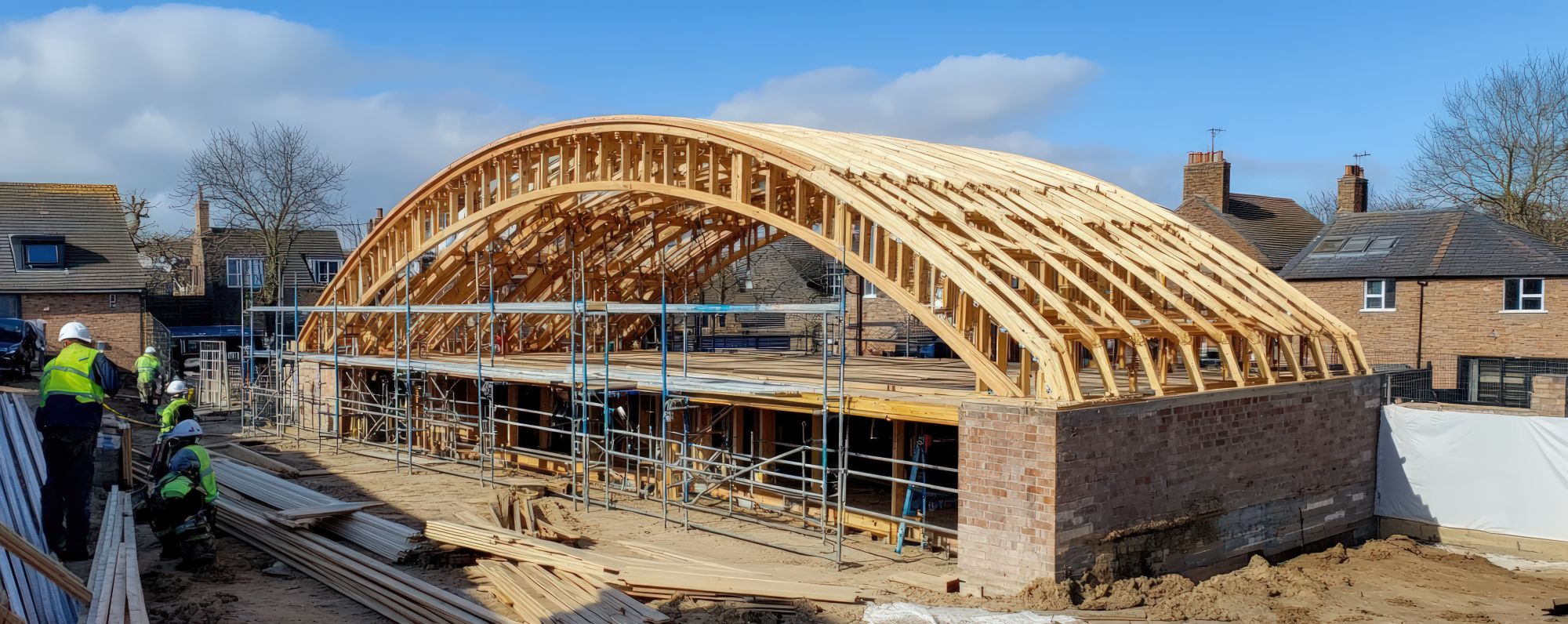
A scalable EPD portfolio expands beyond single declarations and incorporates structured modelling across product variations.
Multiple Product Lines
Manufacturers often require EPDs across:
Variant Modelling
Construction products frequently come in hundreds or thousands of variations. A scalable EPD approach uses:
This enables EPDs to be generated for groups of variants rather than modelled individually.
Verified vs non-verified EPDs
A mature EPD portfolio includes:
The goal is flexibility – providing the right level of detail at the right time in the sales cycle.

Despite rising demand, many manufacturers struggle to produce EPDs efficiently at scale.
Data Inconsistencies
Product lines often use different:
This makes lifecycle modelling inconsistent and time-consuming.
Disconnected Systems
Carbon data is typically stored across:
LCA modellers spend significant time reconciling inconsistent information.
Manual Processes
Many EPDs are still produced via:
This is not scalable beyond a small number of EPDs.
Cost Bottlenecks
Manufacturers often face:
Without a portfolio approach, EPD costs grow exponentially.


Leading UK manufacturers are adopting a structured approach that enables repeatable, efficient EPD generation.
Data Governance
Establish a cross-business process for:
Data governance eliminates inconsistencies and accelerates modelling.
Master PCR Strategy
Most manufacturers require multiple PCRs. A scalable portfolio needs:
This ensures consistency and comparability across declarations.
Standardised Modelling Rules
Create a technical rulebook covering:
This ensures every EPD follows consistent methodology.
Verification Cycles
Instead of verifying each EPD in isolation, manufacturers should implement:
This reduces verification time and cost while ensuring quality.
Leading sectors have begun scaling EPD production using the frameworks above.
Construction Product Manufacturers
Aggregates, concrete, asphalt, timber and glazing producers are adopting parametric LCA systems to model thousands of variants efficiently.
Insulation Manufacturers
Insulation producers are building multi-facility EPD portfolios to reflect varying manufacturing processes while maintaining standardised modelling rules.
Steel & Metal Manufacturers
Steel fabricators and metal producers are embedding EPD generation into:
These industries are at the forefront of EPD scalability.
Cost to Build an EPD Portfolio
Costs typically involve:
However, portfolio-level design significantly reduces cost per EPD.
Procurement Uplift
Manufacturers with complete EPD portfolios experience:
Tender Win-Rate Improvements
Firms with strong EPD coverage report:
The commercial return far outweighs the cost of EPD development.
Speak to us about creating a scalable EPD portfolio for your product range.
We support manufacturers with:
If you’re ready to build a scalable, future-proof EPD portfolio, we can help.