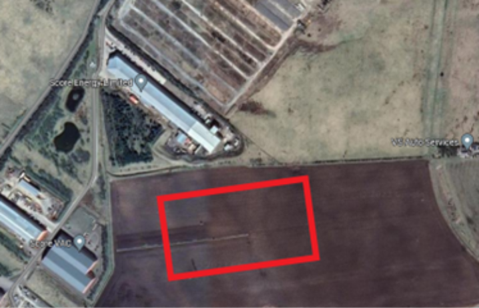
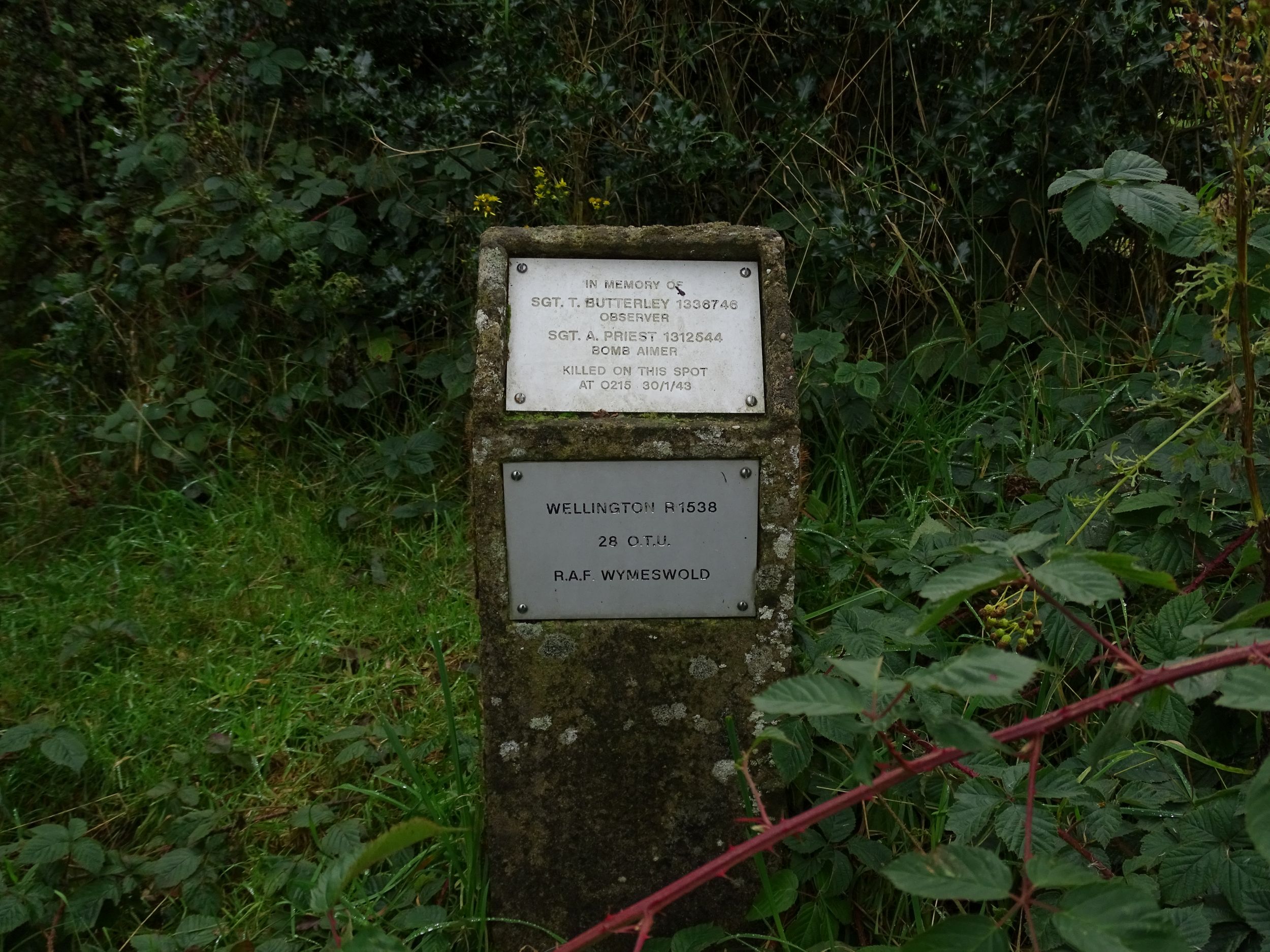
The applicant (Dalecrete) is a large supplier of ready-mix concrete across Staffordshire, Chesire and Derbyshire. The existing section of their quarry was nearing the end of its productive lifespan, necessitating the opening-up of an adjacent field. The Site is designated as a Protected site under the Protection of Military Remains Act 1986 as it is identified as the location of a World War II Wellington Bomber crash-site. The plane crashed during a training flight in January 1943, with two casualties. A small marker commemorates the crash site.
The Wellington Bomber was a medium sized twin-engine bomber made by the Vickers company the aircraft normally manned by a crew of five. The bomber is recorded as having crashed around 02.15 on January 1943. The aircraft was on a training flight having been assigned to No 28 Operational Training Unit of 93 Group, B Command based at R.A.F. Wymeswold located just northeast of Loughborough. From crew evidence it appears that the aircraft was flying low in poor weather conditions when it hit rising ground in the area of Captains Barn Farm.
The available evidence suggest that the aircraft is likely to have hit the ground at an oblique angle and from a relatively low altitude the wreckage thus being spread widely across the surface of the field as opposed to impacting to any great depth into the ground as would be the case had the aircraft hit the ground from a steeper angle or higher altitude. The resulting wreckage would then have been cleared by R.A.F. crash site personnel, this would normally have been taken off site, although on occasions may have been buried close to the impact Site.
There remained a possibility of below ground remains, or residual surface scatters of material associated with this event within the Site.
The Solution
Closely working with the Local Planning Authority a programme of investigation was devised which adequately tested the potential for remains of the aircraft crash. Arthian also worked closely with the MoD, applying for an excavation license from the Join Casualty and Compassionate Centre (JCCC), part of the Defence Business Service (DBS). Periodic updates were provided to the MoD regarding any findings.
A Desk-based assessment, coupled with a geophysical survey was undertaken to identify any potential anomalies relating to the crash, and allow for a more targeted archaeological intervention. Following this, a metal detector survey of the Site was undertaken in order to find any metallic objects that might be avionic in nature.
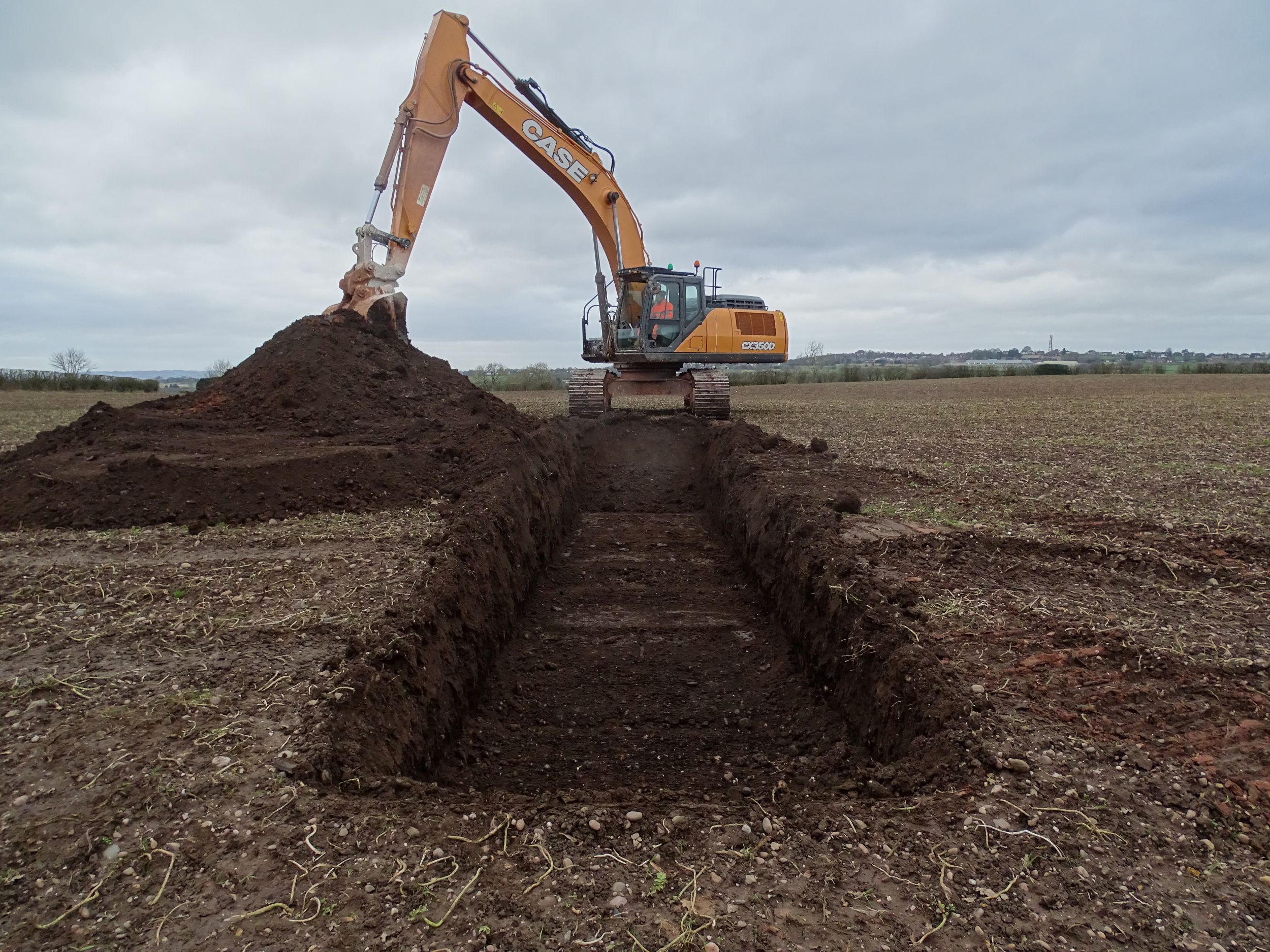
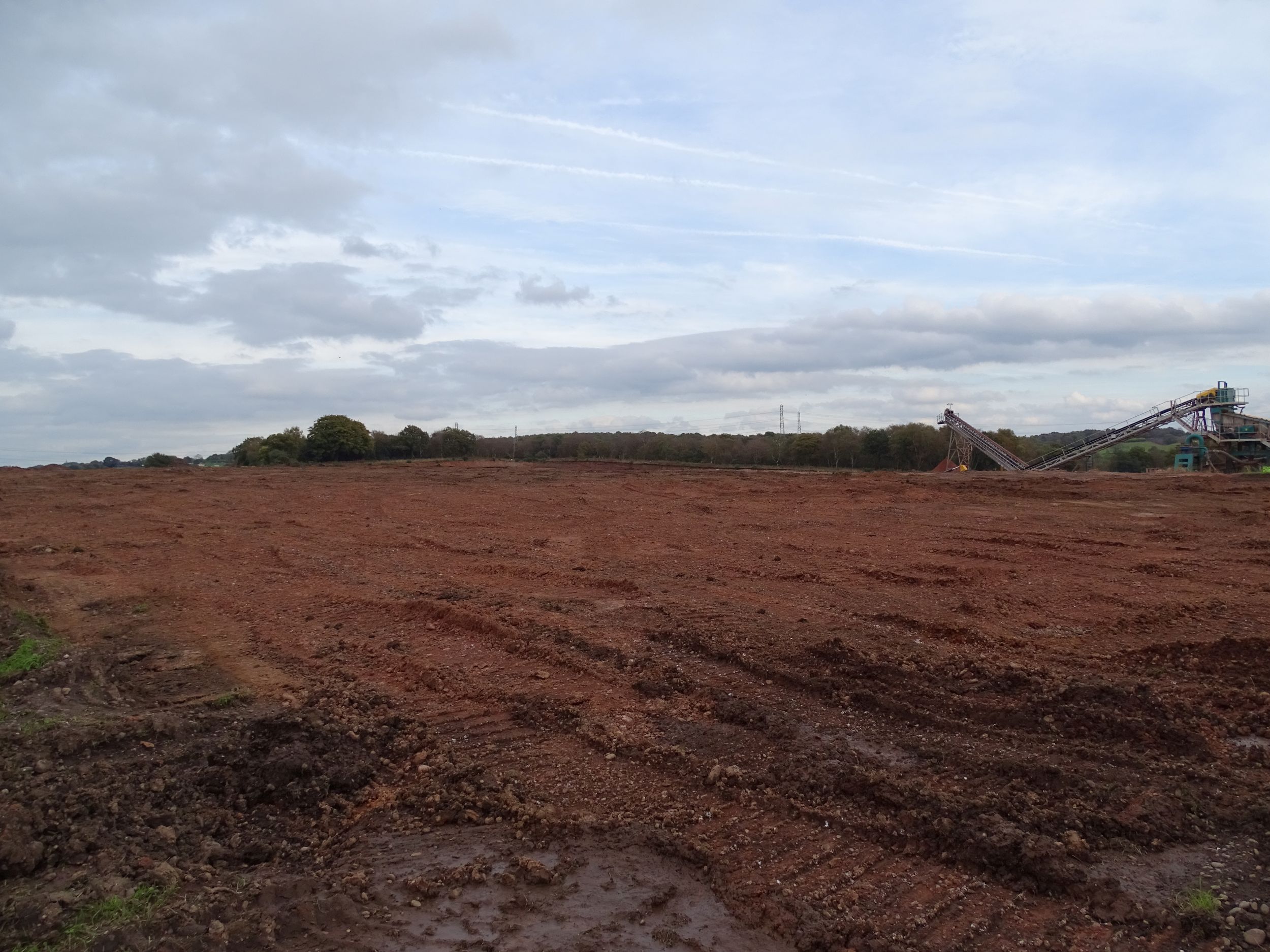
The next phase of works comprised a trial trench evaluation comprising 6 trenches measuring 50m x 2m were excavated. Subsequently, a watching brief was undertaken, monitoring the soil strip of the intended quarry area, down to the natural geology. This allowed a degree of flexibility for the client, who could continue opening new sections of the quarry in a phased manner, once they had monitored and signed off. All archaeological monitoring adhered to the legislative requirements of the Protection of Military Remains Act 1986.
Our Latest Projects
Get in Touch
We’d love to hear from you – whether you have a question, a project in mind, want to explore job opportunities, or just want to say hello.