
Prehistoric rock carvings are one of Scotland’s most enigmatic and poorly understood monument types. Rock art is defined as marks deliberately painted or engraved onto natural rock surfaces. Prehistoric rock art in Scotland forms part of a wider carving tradition known as Atlantic Rock Art (ARA), represented by thousands of examples in northern England, Wales, Ireland, Portugal, and north-west Spain, and also in some Scandinavian countries. The sheer volume of carvings suggests they were significant to the people that made and used them,
Within Scotland these enigmatic carvings are referred to as cupmarks and cup and ring marks, which were created 5000 years ago. Only a handful of rock art sites have ever been excavated in Scotland, and the purpose of the community excavation was aimed at discovering more about why they were made and their importance to the people that carved them.
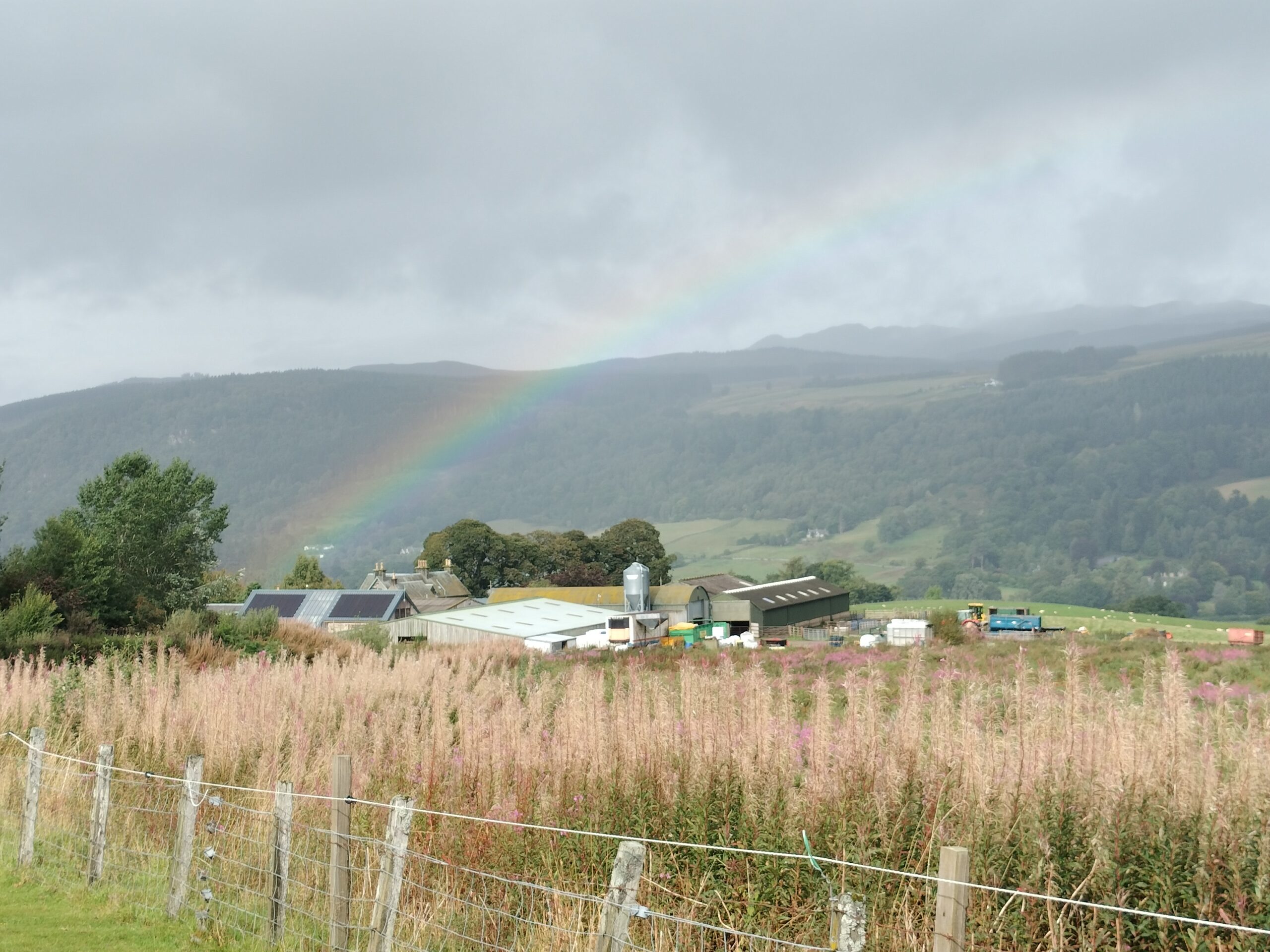
Over 700 rock art sites are currently known to exist in Perth and Kinross, with notable concentrations in the upland valleys of Strathbraan and Strathtay. The community excavation was carried out at two sites in the Strathtay area in Perth & Kinross, near Aberfeldy.
The Solution
Despite the number of rock art sites in the landscape, few excavations have been carried out at Scottish Rock Art sites. The aim of the excavation was to investigate how they came to be and expand understanding of their origin and use. The project was organised by Perth & Kinross Heritage Trust with archaeological supervision for the excavation being undertaken by Clyde Archaeology and an employee of Arthain’s Heritage & Archaeology Team; Dr Pete Klemen.
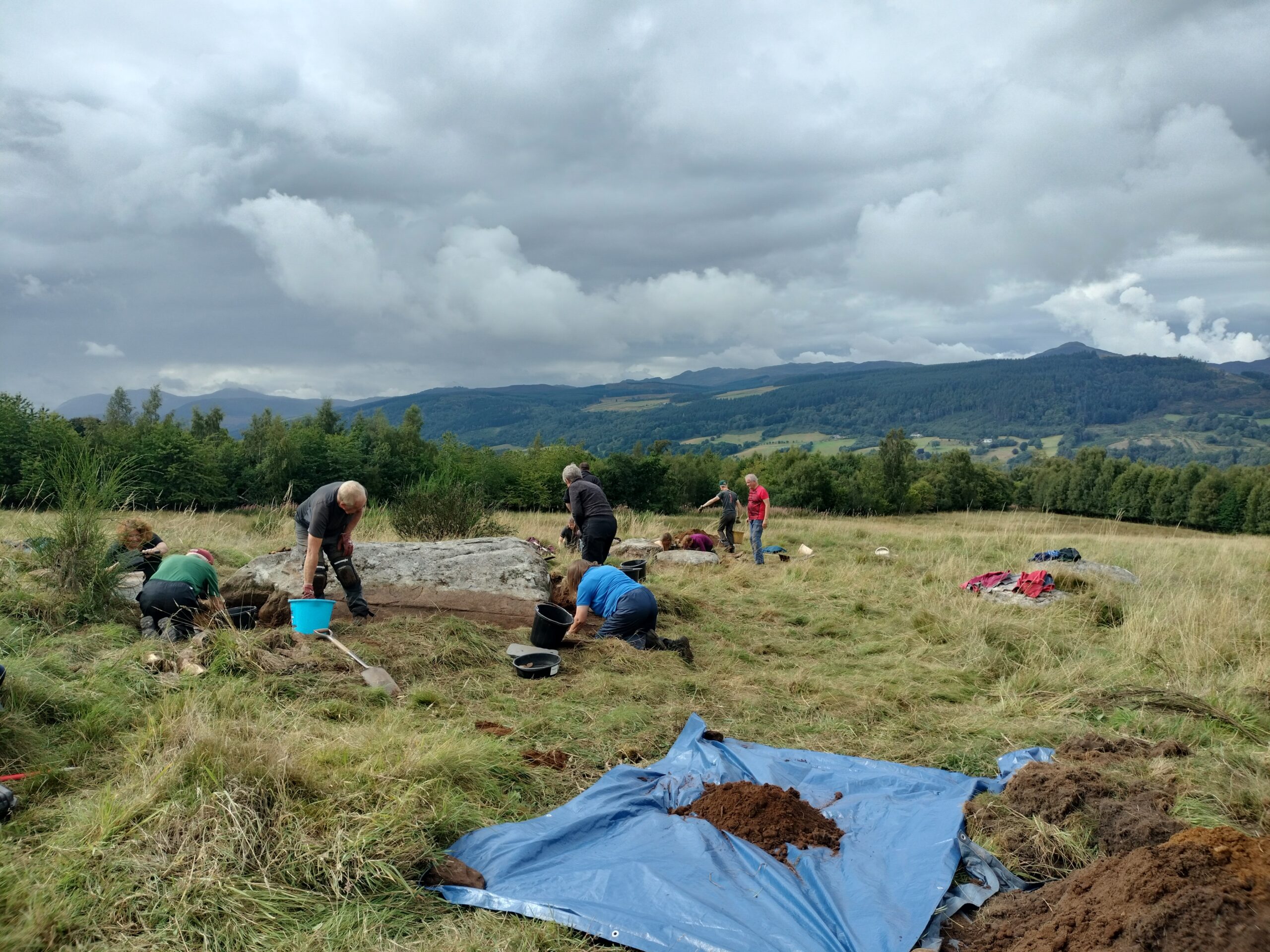
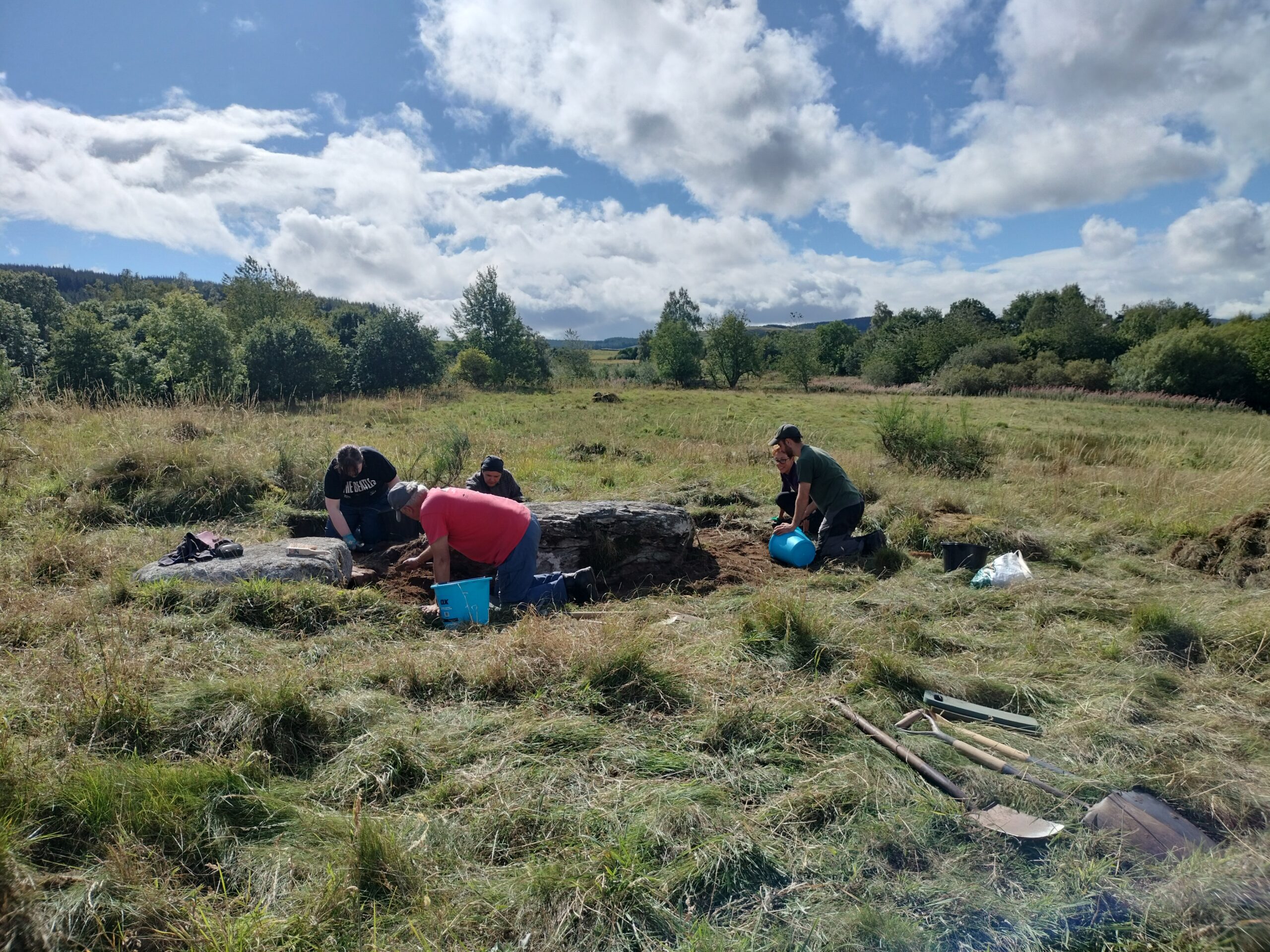
Over two weeks up to 18 volunteers a day excavated natural glacial erratic stones at Knoc An Eaglais and Mains of Murthly. The immediate perimeter of 8 stones with rock art on them were excavated. Although artefactual evidence contemporary in age to the rock art unfortunately was not recorded, previously unknown cup marks were recorded during the excavation process and distinct water worn pebbles, some quartz and others white in colour were found. Such pebbles are not local to the immediate topography in which the rock art is located and as such are suggested to have been deliberately brought to the site.
Further post excavation analysis is to be carried out with a report outing the full results and a 3D record will be made of the nature and current condition of the panels and carvings. The importance of such excavations is both to understand a specific element from our shared past but also to involve as wider audience participation as possible in the study and unravelling of the past.
Our Latest Projects

Get in Touch
We’d love to hear from you – whether you have a question, a project in mind, want to explore job opportunities, or just want to say hello.